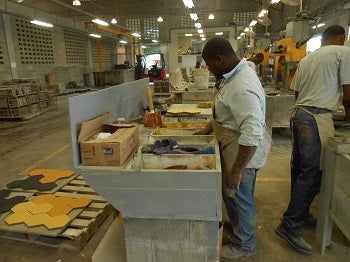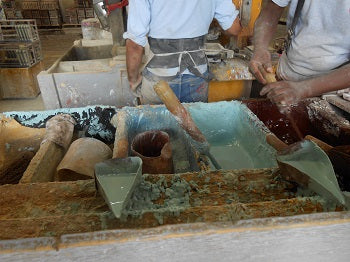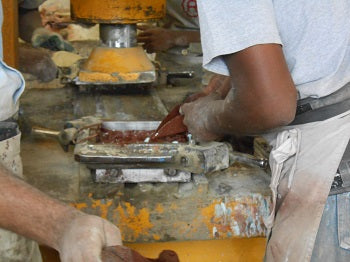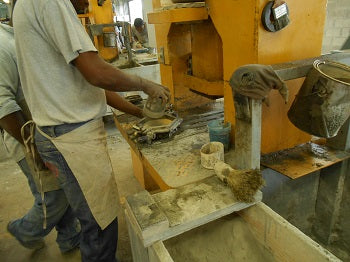
Showing posts with label cuban tile. Show all posts

Tuesday, January 6, 2015

Encaustic Cement Tile as Wainscoting


cement tile wainscoting
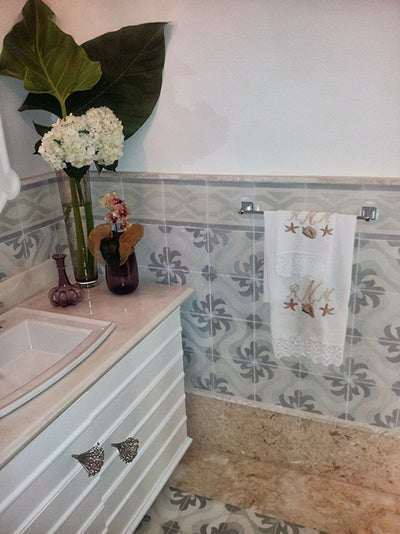
Cement tile is paired with locally sourced coral stone to create this stunning wainscoting for a bathroom.

If you've ever seen a decorative treatment on the lower half of a wall, then you've seen wainscoting. Traditionally, wainscoting is used to protect walls from becoming damaged when chairs or other furniture is moved around, such as in a dining room or eat-in kitchen area. To get a better understanding, let's look at how wainscoting evolved.

A cement tile & stone wainscoting
Pattern and color continuity flow through this Dominican Republic home with the use of a cement tile and coral stone wainscoting.

Interestingly, according to the Online Etymology Dictionary, the word wainscot, rooted in the mid-14th century, means "imported oak of superior quality (well-grained and without knots), probably from Middle Dutch or Middle Flemish waghenscote; related to Middle Low German wagenschot (late 14c.), from waghen (wagon) + scote (partition, crossbar) and perhaps because the wood originally was used for wagon building and coachwork."

Fast-forward now to Elizabethan times where wainscoting grew in popularity as a decorative and protective wall covering. It is still commonly used in Colonial American and English homes.

Manzanillo Cement Tile
Manzanillo Cement Tile adds finesse to any wall or wainscoting application.

La Rochelle Cement Tile
La Rochelle Cement Tile creates a harmonious outdoor wainscoting.

Currently, you can integrate wainscoting into your home with the versatility that only handmade cement tile offers. For a modern, contemporary or vintage look in a bathroom, hallway, or any living area, cement tile provides an ornamental and functional wall treatment that limited only by your imagination.

Traditional Bayahibe Cement Tile
Vibrant Traditional Bayahibe Cement Tile as wainscoting.

Whether you use cement tile wainscoting for an indoor or outdoor application, keep in mind that each cement tile is individually handmade. Slight variations, such as thickness, shade, imperfections, and irregular edges are inherent to this type of product. These characteristics add to the product's natural appeal and do not compromise the performance of the tile.

Lastly, for more information about cement tile selection, installation tips, customization services, or available sizes, shapes and more, please see our Guide to Buying Handmade Cement Tile.


Pinterest logo

Designing with Tile

marsala - color of the year

staircases, halls, entries

"I think I will be able to, in the end, rise above the clouds and climb the stairs to Heaven, and I will look down on my beautiful life." — Yayoi Kusama, Japanese artist and writer

Welcome to 2015! It's been a quite a year, and as we grow older, it seems the year just gets shorter and shorter!

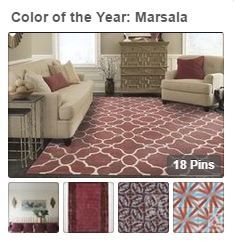
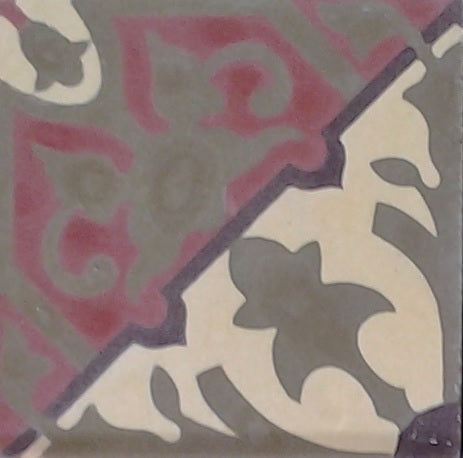
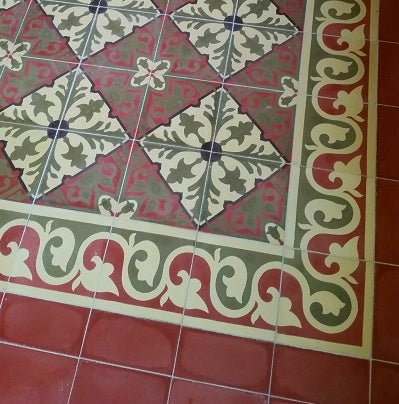
As you've undoubtedly heard by now, Pantone has chosen its color of the year, Marsala. We love this shade as it works so well with our cement tile patterns, such as Cuban Heritage Design 240 1A, Traditional Marrakech Cement Tile, Cuban Heritage Design 260 1A, or choose a rich, unadorned tile with our Heritage Solid Color cement tie in Indian Red.

No matter what you choose, remember Avente's cement tile can be customized to fit any décor or color need you may have. Further, our newly published Guide to Buying Handmade Cement Tile is an especially valuable resource to keep handy. You can download your free copy here, and let the inspiration begin!

From all of us at Avente Tile, we wish you a happy and healthy New Year!

Cheers to 2015 with Special Saving!

Cement Tile Patchwork
Avente Tile thanks all our friends and wonderful customers! Your patronage and support in the past year has been amazing. We have a passion for artisan tiles and providing exceptional, unique designs for your needs. We want to see how your project turned out and love photos of your completed installations, like the one shown here from a customer in California. Share your installation and design photos with us via email or social media channels.

To thank you, we're offering 10% off any online order placed through January 2015. Use coupon code CHEERS. Good luck and best wishes for a wonderful 2015!


Tuesday, December 30, 2014

Cuban Tile Redux in Muted Color Palette


For the last post of the year, I'm excited to share an exclusive tour of a private residence that uses Cuban Heritage cement tiles in a custom, muted color palette. You'll find the design is peaceful and calming. The redux also shows how cement tiles are not just for flooring anymore.

Exclusive tour of a private residence using Cuban cement tiles
Avente's exclusive tour of a private residence using Cuban cement tiles

The tropical setting of this private home on the island of Hispaniola is the perfect locale for Cuban tiles.  The home's design takes full advantage of the balmy, tropical weather and uses an open air design.  You are greeted by a small sitting area that opens to a large covered, open-air patio that joins the dining room, powder room, pool, and living spaces.

Entry patio greets guests and sets the design theme with Cuban tile
Cuban tile entry greets guests and sets the design theme

A Cuban cement tile rug adorns the large, central breeze-way

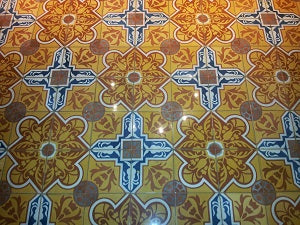
Our Cuban Heritage cement tiles have been popular since we introduced them over ten years ago. Because of their ubiquitous use in residential and commercial applications on the island of Cuba, cement tiles became known as Cuban tiles in some parts of the world. When Cuba was a tropical playground for jetsetters between 1920 - 1950 and for homes built in the Spanish Mediterranean Revival period, Cuban tiles were de rigueur flooring for businesses, hotels, and private estates.

This pattern, Cuban Heritage Design 150, does not utilize a border that was common in traditional Cuban designs.  However, the rug's colors standout from the surrounding coral stone pavers and a more contemporary feel is maintained without the use of a border.

Cuban Heritage Design 150 cement tile using a custom, muted color palette
Cuban Heritage Design 150 using a custom, muted color palette
While I love the eye-catching, open-air patio with the large cement tile rug, the powder room and dining room are some of the best examples of how a traditional, handmade product can adapt to provide design consistency and durability.  You'll notice that cement tile is used both on the floor and as wainscot in this small; but, rich powder room.  Avente's Traditional Salcedo border cement tile is used to frame the top wainscot row.  Also, notice the border pattern orientation does not change by the door as is it would in a traditional installation. All, unique details, executed flawlessly that really work.

Cement tile are used for floor and wainscot in this powder room

Note the unique border tile orientation near the door

Cuban tile in soft colors work well for this powder room floor and wainscot

The large, formal dining room sparingly uses the same Cuban Heritage pattern and colorway as wainscot between the tall, windows and French doors that run from floor to ceiling.  This is a nice way to maintain the color and pattern without getting "pattern overload."


The same Cuban tile is used as wainscot in the formal dining room.
The same Cuban tile is used as wainscot in the formal dining room


Another view of the large dining room that uses cement tile wainscot

A detail showing cement tile wainscot

Leaving the dining room from the same door that I entered, I once again strolled across the large open patio that connects all the living spaces. This time, I headed away from the entrance to get a glimpse of the pool and golf course.  Before, I reached my destination, I spotted a reflecting pool that provides privacy.  The pool is very Romanesque; but, rather than being lined with mosaic tile they used cement tile.  The same Traditional Salcedo border pattern that you see in the bathroom wainscot is used for the reflecting pool sideboard.  Here the effect is even more subtle; but, the  geometric design works well and helps keep the design motif consistent.

A reflecting pool uses cement tile for the sidebar.
A reflecting pool uses cement tile for the sidebar

Two rows of cement tile (Salcedo border pattern) add subtle design interest for this pool
Two rows of Avente's Salcedo border pattern provide subtle design details for this pool
I finally made it past all the stunning tile details to get a glimpse of the ocean.  Wow, what a verdant and peaceful ocean view!
View of pool, golf course and ocean from patio

I hope you enjoyed the exclusive tour of this private residence on the island of Hispaniola.  While this classic Cuban tile pattern has been brought back to use, I think you'll agree that the redux is both unique in design and creative in application.  I love how a simple, muted color palette, and repeated pattern work to create a a peaceful and harmonious theme throughout.

Want to see more photos of this installation? View the slideshow below, or click to see Cuban Cement Tile with Custom Color for Residence.


Cement tiles provide design flexibility because they can be customized with your choice of colors. As this project illustrates, cement tile adapt to any setting and work well in contemporary or traditional installations. Finally, you can't forget that cement tile are durable and will withstand decades of wear with little care. Finally, they can be used on floors, walls or even ceilings. They are a great way to carry a design motif, pattern or color throughout a home to achieve a cohesive and harmonious design. Visit our website to see all of the Cuban Heritage encaustic cement tile patterns and colorways we offer. Or, like this customer, you can customize the colors on any pattern to suite your distinct sense of style.


Tuesday, August 26, 2014

Cement Tile Quality Expectations in Custom Design


To help gain perspective and set realistic expectations of handmade tile, I often say artisan tiles are like the strokes of an Impressionist painting or hand woven rug. When you closely look at the stroke or weave, you will see color variation and the design motif itself may not be perceptible or clear. Step back though and the blended imperfection of the artist's hand creates a stunning work of art.

Sunset in Venice by Claude Monet
Image Credit
Our modern-day world has created an affinity for perfection. We are so used to seeing everything crafted to such tight tolerances that glossy productions are de reguer. One of the most common questions I hear when people receive their first sample or order is that the "The cement tile is not perfect" in some way.

Handmade Cement Tile will have slight imperfections
Handmade Cement Tile will have slight imperfections.
We want our installation to look like that bistro in Paris or Hacienda in the Yucatan. The truth is that the imperfections are there; but, the beauty of the pattern and variation in color allow your eye to see the same thing you see when you look at a Monet or Seurat.

The beauty of cement tile is in the variation and slight imperfections
The beauty of cement tile is in the variation and slight imperfections.

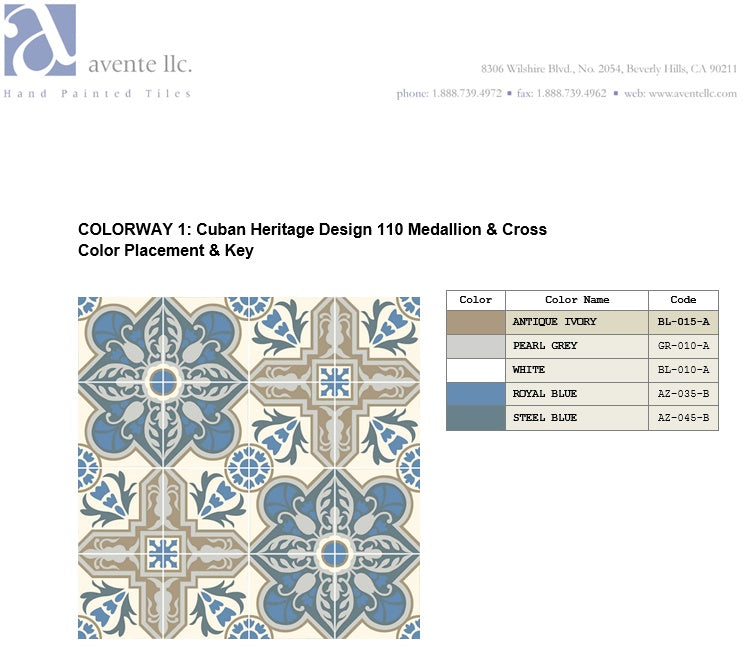
I do enjoy sharing this journey of discovery with folks unfamiliar with cement tile, or encaustic cement tiles as they are often called. I've been working with a customer in Denver on a design. She discovered our Cuban Heritage Design CH110-2B pattern and while she liked the colorway, it just wasn't right for her. I explained that the colors for that pattern are easily changed using any color from the Heritage Color Palette. However, this process takes time  we are talking design here. The best place to start is with color chips so you can create a cohesive design and really see the colors. A few weeks after receiving her chips, she had found the right colors and had us create several renderings to see what worked best.


A sample of one rendering that Avente provided using the customer's color choices
A sample of one rendering that Avente provided using the customer's color choices.

Color substitution are never easy; but, I was impressed with the colors she selected and loved the different choices. This design-inspired Denver homeowner found the renderings the ideal way to find what worked best and ordered strike-offs or sample tiles of the rendering that she like best.

This is a story, of how a project should go! And, I felt thrilled that each step of the process helped quickly guide the homeowner to make a decision they loved. Three weeks after the samples arrived, I received this email:
Hi Bill,

We received our strike-off samples. As expected we love the design and are so pleased with the color combination! Given the tiles are handmade, we did expect some slight variation from tile to tile 
 minor blemishes or color bleeding, lines not matching up perfectly.
Photo of customer's strike-off with slight color variation and line widths.
However, can you comment regarding this particular tile (see below)? Is it representative of the typical quality we should expect? We are concerned.

Pattern lines on tiles should be crisp.

I can see why she was concerned. In my efforts to set reasonable expectations for a hand made tile, I had neglected to explain that strike-offs samples may not always have the most crisp pattern lines because it takes time to get the metal mold to settle and work with the frame.

Here's my reply:
Dear Denver,

I think your expectations for cement tile are correct – which means I've done my job. The variation in color and slight imperfections you find in the first set of images are to be expected. The blurred pattern and edges in the second set of images (with red circles) should not be expected in the full order.

The primary goal with strike-offs is to confirm color acceptance for the pattern. The problems you see in the second set of images occur in strike-offs because we can’t make enough tiles and fine-tune the process that allows the mold to settle.


I hope you have enjoyed understanding how the hand of the artist creates a unique look in cement tile and the importance of quality in custom design. Never stop asking questions because they provide the clarity to ensure you are buying a top-notch product. If you enjoyed today's post on custom cement tile design and what makes a high quality tile, you might also enjoy our Avente Tile’s Guide to Buying Handmade Cement Tile to learn more about this amazing product.

Download: Guide to Buying Handmade Cement Tile

Of course, all of us at Avente Tile are here to help you with your cement tile questions, design solutions or technical questions. Feel free to post a question here and don’t hesitate to call us at 888.739.4972; or email: info@aventetile.com.

Tuesday, March 25, 2014

Cement Tile Tips for the Pattern Shy


We've been Playing with Pattern in Tile Design this month and shown you how Simple Patterns are Powerful! There's no doubt that patterned cement tiles are a great way to add style to any room. Today, I want to share a few design secrets on how to effectively use patterns. First, ask yourself if are you a pattern addict or a wall flower? It's OK to swing both ways, too! Sometimes the room's design dictates what to do!

Tips for the Pattern Shy

If you are a pattern wallflower, then you are pattern shy. If you are timid with patterns, it's best to choose just one pattern that you love and design the whole room around it. For example, you might start with a bold Cuban pattern rug and then choose fabric with similar colors and design elements. Remember, colors don't have to match exactly, they just need to be close enough for your eye to tie it all together.

This space is designed around the cement tile rug
This space is designed around the cement tile rug.

The blue striped pillows are nice accents to the blue in the cement tile rug. However, they are not an exact match. The dark finish on the coffee table picks up the dark roast color in the tile. Did you notice that you can even put a carpet over a cement tile rug to break the pattern? The room and floor still look great because the sitting area is defined!

Let the pattern make a statement with a bold design. Think about a kitchen backsplash or entry. There may not be a lot of space, but can completely transform an otherwise common or dreary area with a bold patterned tile.

Cuban Cement Tile Patterns are used for a kitchern backsplash
Cuban Cement Tile Patterns are a great choice for the pattern shy.

You need to start any design project with a clear concept of the tile pattern, color and size because such a strong design element will influence other parts of the design.


Design Tip: Lets the pattern make a statement with a bold design.
These bold Cuban tiles brighten the entry.

In the project above, did you notice how the yellow walls and red stairs tied the entire design together? Repeating the color reinforces the design and makes the space cohesive. This small entry is less than 60 sq. ft.; but, the bold design packs a powerful punch and becomes the center of attention.

Remember, if you are timid or new with patterns, choose just one pattern that you love and design the whole room around it. With their strong patterns, bold colors, and use of borders, our Cuban cement tiles allow you to easily make a statement with a bold design.


To learn more about cement tile pattern, see our cement tile design ideas. Next week, I'll share Cement Tile Tips for the Pattern Addict! You'll be a pattern pro, just stay tuned.

Tuesday, February 25, 2014

Tile Fireplace Design Tips

— Written by , Avente Tile

As February comes to a close, so does this month’s focus on tiled hearths and fireplaces. Today I will share three tips that can help you achieve the best design for your tiled fireplace. Tile will dramatically alter the look of a fireplace and improve a room’s look and character for a modest cost. Most fireplaces need just a few tiles, so it’s one place you can splurge, get something you really love, and still not break the budget. 


A fireplace using hand painted Spanish Tile
A fireplace using hand-painted Spanish Tile

Design Rule #1 for Tiled Fireplaces: What’s your style?

Define your style and your home’s style before deciding what tile to use. Just because you love a tile doesn't mean it will work with the design and flow of your home. Do you like plain, solid color tiles or patterned tiles? Are you working with a rustic or contemporary design? Answer these questions, and then remember that fireplace designs falls into two categories:

  1. Fireplaces that use only plain or field tile. 
  2. Fireplaces that use pattern tiles and field tile or some other material, like a stone mantle.

You can add decorative tile as accents or create a pattern with plain tile using two or three different colors of tile. Decide what style suits your tastes and the style of your house.

Hand Painted Spanish Tile Accents used for Fireplace
Detail of hand-painted Spanish tile accents used for this fireplace

Choose patterns consistent with your style and textures that will enhance it. The rough, uneven surface of our handmade Rustic Pavers and Arabesque tiles, for example, impart a provincial  feel that works great for houses with a Spanish, Southwest or colonial design. Our hand-painted Yucatan field tile will evoke an Arts & Crafts feel when the right glaze color is used. For a more formal effect, look for tiles with a smooth surface and precise edges. Use lighter glazed tiles to brighten the area. Relief tiles are a great way to add texture. 

Hand painted Spanish tiles create a rustic look
Hand-painted Spanish tiles create a rustic look

Decide on a color scheme and then start looking for tiles! Make sure to give the design aspects of the project proper attention. Take into account the scale, pattern, and texture of the tile.

Design Rule #2 for Tiled Fireplaces: Frame the Firebox


Cement Tiles used around a fireplace's firebox
This handmade Yuna cement tile border frames the firebox

It may sound obvious, simple or overstated, but make sure your fireplace tile design works by framing the fire box. It’s pretty simple, the theme for our design is really about the fireplace – drawing attention, warmth and comfort to that one space to share with friends and family.

You can frame the fire box with a decorative border tile or patterned cement tiles. For plain tile installations, use molding, different color tile, or a different format. For instance, if you are tiling the fireplace in 6”x6” tiles, try using a 3”x3” tiles around the box. 

Patio Fireplace with Sangria Red Tiles
Sangria red plain tiles frame the fire box.

Take a look at the four design ideas below. Notice each one of them frames the  firebox even if other design elements like a tiled mural or panel are used. In Design #1, a border pattern of cement tile creates the frame. In Design #2, a decorative liner or border tile frames the fire box. 


Andalucia Spanish Tile Fireplace
Decorative Andalucia Spanish ceramic tiles create a border around the fireplace's firebox.

Similarly, a 6" deco tile was used in Design #3. Plain tiles in sangria red provide the detail for the final design.

Yuna Cement Tile Fireplace
1. Cement Tile Fireplace
Spanish Tile Fireplace
2. Spanish Tile Fireplace

Spanish Tile Fireplace
3. Spanish Tile Fireplace
Ceramic Tile Fireplace Mural
4. Fireplace Tile Mural

Design Rule #3 for Tiled Fireplaces: Consider Scale

Scale your project to the size of the room and fireplace surface for balance. Tile size and pattern will drastically alter the fireplace’s appearance. The tile’s size needs to be in scale both to the size of the firebox and the room. The pattern on the tile, the tile layout (or how it is set), color and texture will create an atmosphere – make sure it’s the one you want.
 
A medallion using Celtic tiles provides subtle interest.
A medallion using Celtic ceramic tiles provides subtle interest.

Frequently, folks love a certain tile pattern and want to use it for their fireplace. After ordering samples, they will give me a call and say it just didn't work. I’ll often ask, “Did you try it in a smaller format? That fireplace isn’t very big when you are trying to fit patterned and field tile.” Sure enough, the design works when the tile is the right scale for the fireplace. When working with patterned or decorative tile, it’s a good idea to look at patterns that are available in different scaled formats, like our Malibu, Barcelona, Spanish and Portuguese ceramic tile lines.

Cuban Heritage Border Tiles provide warm colors and charming pattern.
Cuban Heritage Border Tiles provide warm colors and a charming pattern.

If you want to tile your fireplace, keep these three tips in mind and you should be on your way to creating a design that you will love! I hope you enjoy our series of blog posts devoted to tile and fireplace design.


Do you have a question about using tile for your fireplace or hearth? No problem! Leave your tile question in the comments section of this blog, and we'll happily answer any questions you may have.

Fireplace and Hearth Tile Design Posts

If you enjoyed today's post, then you might enjoy previous posts on tile fireplaces and hearths.

Tuesday, January 21, 2014

Polished Cement Tile Benefits a Kitchen Backsplash

Last week, I received a wonderful email from Interior Designer Eugenia Triandos in Montreal, Canada. She shared an installation photo from a recent project that showcases Avente's popular Cuban Cement Tile!

A recent kitchen remodel in Quebec used Cuban Cement tiles.
Design by Eugenia Triandos of Triandos Creations.


She also included this kind note:
I just wanted to let you know that my project was completed and my clients are very happy with their backsplash.

Eugenia Triandos
Triandos Creations

Thanks, Eugenia!  I have to compliment you on this beautiful kitchen design. The color choices really stand out. Everything works together using the same color palette as the tiles. Nothing makes me happier than seeing an installation photo and hearing customers that are thrilled about their tile!

Now, on to this week's topic. Last week I discussed some important points about grout and cement tile for backsplash design. This week, we'll discuss why polished tiles are the best choice for a cement tile backsplash.

Benefits of Polished Cement Tile 

One subtle and widely misunderstood aspect of cement tile is the finish. Usually, cement tile is supplied in a raw, or unfinished state. For now, one Western Hemisphere manufacturer allows you to purchase cement tile with a "polished finish," while another will be offering this service in about one year. It's important to know what polishing is, what it does, and why it is so beneficial to have polished tiles for a backsplash application. If polishing is a new term or confusing, start by reading my post that answers the question, What is Cement Tile Polishing?

As I mentioned above, most factories only manufacture unpolished or raw cement tiles. Currently, only one manufacturer, Aguayo Cement Tiles, provides the option to receive factory-polished tiles. Polished tiles have a satin sheen that simulates the finish all cement floor tiles achieve over time with care and use. This sheen develops from abrasive forces acting on the tile from everyday use. Although raw tiles can be polished with a floor buffer and green pad after installation, the sheen won’t develop immediately. Buffing will also remove any surface color bleed on cement tile; but, you won’t be able to use a floor buffer on a vertical backsplash installation.

Color bleed is common on high contrast tiles, such as patterns that use black and white. Color bleed occurs when cement tiles, placed in racks, are removed from a water bath that is necessary to strengthen the tiles as they cure. The water picks up trace amounts of pigment and drains down the tile. The dark pigments wash over the lighter areas of the tile, leaving a faint discoloration. This is a normal  part of the manufacturing process; but not desirable for backsplash tiles that are in the limelight.

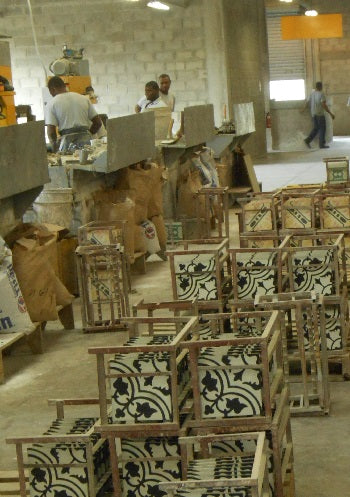
Cement tiles are placed on metal racks to dry after made
Cement tiles are placed on metal racks to dry after they are made.

Color bleed can occur when the tiles are removed from water bath to cure.
Racked cement tiles are lowered into a water bath to cure for 24 hours.
Color bleed can occur when the tiles are removed.

Finally, polished tile are usually easier to install because grout doesn't stick to the slightly smoother surface. In general, a grout release is not required for polished tiles. Whereas, on raw cement tile, I think it is a good precaution. As a side note, Cuban Heritage cement tiles are only sold with a polished finish.

The only time I don't recommend polished tile is for exterior patio applications. Quite simply, the polishing benefit is lost quickly over time to the elements of wind, wear and weather.

Cement Tile Backsplash: 7 Things You Need to Know Before You Buy

We came up with the 7 Things You Need to Know Before You Buy guide to help answer any questions you may have about a cement tile backsplash. Within this guide, you'll find that polishing is discussed on Point 6 with very straightforward advice:
  1. Purchase polished tile, if available.
Want to find out more? Learn what you need to know before installing a cement tile kitchen backsplash. Download and read, 7 Things You Need to Know about Cement Tile Backsplashes. You'll find answers on polishing, sealing, grout, and much more.


Do you have a question about using cement tile that we didn't answer here or in our free guide, Cement Tile Backsplashes: 7 Things You Need to Know Before You Buy? No problem! Leave your cement tile question in the comments on this blog and we'll happily answer any questions you may have.

We look forward to hearing from you!

Tuesday, October 29, 2013

Aguayo Cement Tile Factory Tour

I just returned from a business trip in the Dominican Republic meeting with the owners of the Aguayo Cement Tile Factory. Aguayo Cement Tiles are well known for their quality, large color palette, and commitment to new design. I've included Aguayo Cement Tiles in Avente Tile's line of hand-crafted tiles since I started the company more than a decade ago.

Cuban Tiles from the Aguayo Factory
Cuban Tiles from the Aguayo Cement Tile Factory.

The trip was a great opportunity to discuss new product lines, manufacturing process improvements, and the ways Avente and Aguayo can work together to improve upon the service we offer to you, our customer. Although I had visited the factory and installations in this wonderful Caribbean island of Hispaniola before, each visit has always been filled with surprises, thanks to my very gracious host, Jorge Aguayo and his family. The Aguayo's have been making cement tiles for three generations. Their dedication shows by way of a top-notch manufacturing facility, their tile quality, and their passion for making each tile right. They always go out of their way to not only welcome me to the factory, but also into their family, as well as all that this island has to offer.

It's through Jorge's kindness and warmth that allows me to share both the inner workings of a cement tile factory, and bring well-deserved attention to the hands that touch each and every tile. First, thank you, Jorge, for sharing so much about cement tile with me and allowing me to photograph and share what three generations have labored to create.

I hope you enjoy this tour of the Aguayo Cement Tile Factory. You'll walk away with a better appreciation and understanding of why handmade cement tile is truly a labor of love.

Mixing the Color Layer of Cement Tile

Calcium Carbonate in bins will be weighed and mixed to form the color layer of cement tile
The calcium carbonate in these bins will first be weighed, and then mixed to form the color layer of cement tile.

The color layer of handmade cement tiles is about 1/8" thick. The color layer is made from a mixture of the following:
  1. White Portland cement
  2. Marble dust
  3. Silica sand
  4. Calcium carbonate
  5. Mineral pigments (such as iron, cobalt and chromium oxides).
Mineral pigments are mixed to make the 90 colors available for Aguayo Cement Tiles.
Mineral pigments are mixed to make the 90 colors available.

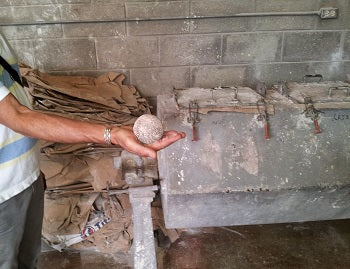
The color layer is prepared in batches and every component is weighed in order to achieve color consistency. The color is mixed in a horizontal mixer that guarantees the homogenization of the mixture. The large ball (shown below) is used to help achieve these manufacturing requirements.

The color layer materials are mixed in the horizontal mixer.
The color layer materials are mixed in the horizontal mixer. 

For small batches, strike-offs, and samples, only a small amount of color is mixed in a bucket and blended with a "hand mixer."

Creating a Pattern - Cement Tile Molds

Patterned tiles are created using a mold that follows the lines of the pattern.

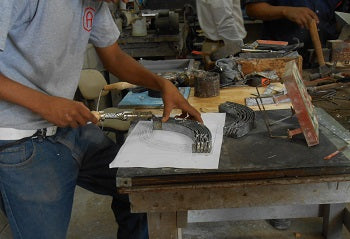
Cement tile mold being worked and checked against pattern.
A cement tile mold is being worked on and checked against a pattern.

Here's the cement tile mold library where molds are housed for existing patterns. If you want a new pattern or pattern in a different size, then a custom mold will need to be created.

Avente Tile owner Bill Buyok (foreground), looks at some of the Aguayo cement tile molds.

Hand-Making a Cement Tile

Each station is manned and operated by an expert cement tile maker and a mi ayudante, or my helper, in Spanish. The helper allows the expert tile maker to focus on getting the right colors in the mold slots, keeps the liquid cement tile bins full, and makes sure there is plenty of sand for the second and third layer.  Without a helper, the time to make a tile would more than double.

Each expert cement tile maker has an assist.

The color is then mixed with water in mixing bins located at each station.

Color is mixed with water at the tile maker's stations.

The colored cement is hand-poured into the different sections of the molds. The thickness of the color layer will always be between 3-5 millimeters.

The colored cement is hand-poured into the different sections of the molds.

Two layers of cement and sand are poured on top of the color layer to not only add strength, but also to absorb water from the color layer.

Two layers of cement and sand are poured on top of the color layer
Two layers of cement and sand are poured on top of the color layer.


Finally, the cement tile is pressed using a hydraulic press, which applies 1,700 PSI of pressure. The tiles are then placed on racks as they come off the line.


The cement tiles are placed on racks as they come off the line.

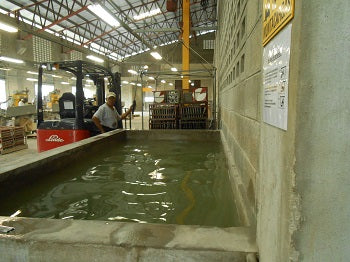
The following day, the cement tiles are soaked in water in order to achieve water saturation and hardness. The water bath guarantees proper cement hydration.

Racked cement tile are lowered into this water bath.

The tiles are left to dry for 10 days and then hand-inspected. After 28 days from start of manufacturing, the cement tile's color surface will have obtained 98% of its hardness and is usually ready to be installed. It takes about two weeks for the tiles to arrive in Miami after they leave the port of Santo Domingo, including about one week for customs.

Tiles leaving the factory on an Aguayo truck for the Port of Santo Domingo
Tiles leaving the factory on an Aguayo truck for the Port of Santo Domingo.

I hope you enjoyed the Aguayo Cement Tile Factory tour. You can see why making these tiles takes at least six to eight weeks for manufacturing and delivery. Now that you have an appreciation for the process, let us know what Aguayo Cement Tile pattern and colors you'll be using for your next project. We've made it easy for you! Just stop by our Avente Tile 's Aguayo Cement Tile Information Center!