Showing posts with label Tile design. Show all posts

Tuesday, July 7, 2015

Malibu with Terracotta Ceramic Tiles: A Historical Perspective

Stunning view of the Malibu coast from the historic Adamson House.

Situated in one of the most sought after coastal locations on the West Coast in Southern California, and perhaps the nation, is the Adamson House. Now a museum, the Adamson House occupies land that was previously home to the Chumash Indians until the 18th century. Later, according to Malibu Adamson House Foundation (MAHF) records, “the Rindge family owned 17,000 acres and 20 miles of coastline.” With the coast on one side and the Santa Monica mountains on the other, “the Rindge family’s daughter, Rhoda, and her husband, Merritt Huntley Adamson, used the site to construct a beach house, now the historic Adamson House museum.

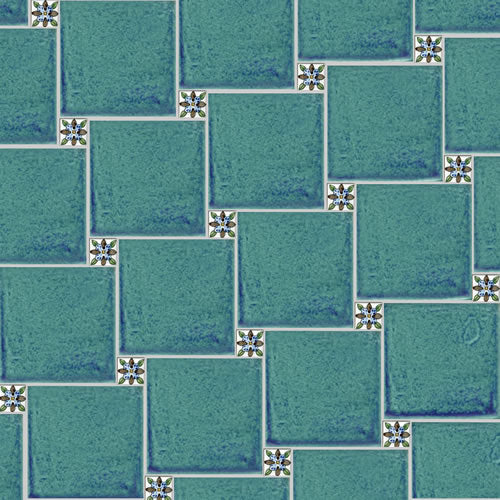
A closer look at the blue-glazed Malibu with terracotta tiles at the Adamson House.

Moreover, the Spanish Colonial Revival style home, built in 1929, enjoys the designation of being a National Historic Site, California Historical Landmark, and a California State Park. “Situated near the Malibu Pier between popular Surfrider Beach and the Malibu Lagoon, the house boasts an exotic mix of Spanish and Moorish influences with dazzling displays of decorative tiles and one-of-a-kind craftsmanship including hand-carved doors, hand-painted frescoes, molded ceilings, distinctive cast ironwork and lead-framed bottle glass windows,” the museum added.


Malibu glazed ceramic tiles meld beautifully with terracotta tiles along the walkways of the Adamson House.
Malibu glazed ceramic tiles meld beautifully with terracotta tiles along the walkways of the Adamson House. 

Interestingly, California was inundated with tile-producing companies in the 1920s, including Malibu Potteries, the company founded by May Rindge. “Filled with an entrepreneurial spirit, May Rindge started the firm after discovering her land was rich in the natural resources needed to manufacture ceramic tile. She wisely hired Rufus Keeler—a ceramist and draftsman whom many considered a ceramic genius for his secret glazes known for their color and clarity—as her plant manager,” according to the MAHF.

Thankfully, the tradition of creating colorful, decorative and long-lasting tiles similar to those found in the Adamson House remain strong with our latest introduction, Malibu with Terracotta Ceramic Tile.

Vibrant colors coupled with Spanish- and Moorish-inspired patterns make our Malibu with Terracotta Ceramic Tile collection a feast for the eyes.

This line of hand-painted ceramic tile pays homage to the Malibu and Catalina Potteries of California of the 1920s. Using classic patterns, these tiles are created using the cuerda seca technique to produce a slight relief and outline around each pattern color where the glazes pool. These tiles differ from our decorative ceramic Malibu tile line because the design utilizes unglazed terracotta or bisque for the background for a traditional Spanish look. Mix and match plain field tile colors from our Malibu Field to create harmonizing designs. The Malibu with Terracotta Ceramic Tile collection is suitable for all indoor applications, including walls and floors. They are also suitable for outdoor locations in frosty environments.


`

What good is the warmth of summer, without the cold of winter to give it sweetness? ~ John Steinbeck

With school out for the summer, and our dreams of upcoming summer adventures coming to fruition, we chose the Pinterest board that best reflects this exuberance – Summer Food and Fun!

Summer’s energy translates to taking on new projects, perhaps one that has been set aside for years. Replacing cracked or broken pool tile or finally installing that fountain or water feature you’ve always wanted for the garden, and perhaps adding Malibu Ceramic Tiles with Terracotta to an indoor or outdoor set of stair rises.

Using handmade or hand-painted porcelain tile for your next outdoor or indoor project will not only enhance the look of your home, but you can rest assured the tile you choose will withstand the elements, too. For whichever project you choose to conquer, Avente Tile is here to help you reach your design goal. Our extensive ceramic tile Design Idea gallery features a large collection of projects dedicated to inspiring you and your living space. How can we help inspire you today?

Tuesday, June 2, 2015

Hexagon Cement Tile – Patterned and Plain

Star and Hexagonal Tile Panel, 13th-14th century (Nishapur, Iran).
Image via The Metropolitan Museum of Art.

Steeped in a rich history of architectural, design and natural elements, the hexagon is a fundamental shape when it comes to building. The six-sided polygon, which can be found in honeycombs, crystals, snowflakes, and most importantly tile, creates a classic yet distinguished look.

Arabesque Hexagon Spanish Paver Tile | Avente Tile

Beginning in late 2013, it was evident the hexagon was once again climbing in ranks as a desirable shape in the designs and patterns of tile. During Coverings 2015, hexagons played a more sophisticated role in terms of visual and tactile significance with increased offerings in cement, encaustic, glass, porcelain, ceramic and stone.

Also of importance was how the hexagonal shape was used in everything from small mosaic tiles to large format tiles, as both a flooring and wall tile. Patterns, textures and embossing further elevated the hexagon’s allure among the attendees of Coverings.

In a further testament to its time-tested flexibility within the design and architecture segments, the hexagon is often used to create the illusion of a cube by connecting every other vertex to the center, forming three diamonds, and shading each diamond differently, as shown below.

Geometric Cube A 8" Hexagon Cement Tile | Avente Tile

With their simultaneously modern and historical background, hexagons are continuing their rise in popularity with the increase of renovation efforts in both public and private spaces, such as homes, retail spaces, hospitality venues, and more.

Mission Hexagonal Frame 8" Cement Tile | Avente Tile

Lastly, depending upon the look and feel you’re trying to exude with hexagonal tiles, your hardest decision may just rely upon the size of the tile. Do you want to create a high energy, dramatic environment with smaller formats, or would you rather create a more laid back, relaxing atmosphere with a larger format of hexagon tiles? It’s all up to you, and that’s the beauty of this classic shape ‒ it becomes what you want it to be!


For more information and inspiration about patterned and plain hexagon tiles, visit our comprehensive Hexagon Cement Tile Buying Guide.


Tile Shapes: Hexagons  | Avente Tile's Pinterest Board

“There is geometry in the humming of the strings, there is music in the spacing of the spheres.” 
~ Pythagoras 

Geometrical shapes and patterns are currently enjoying their time in the design spotlight, most especially hexagons. From fabrics and textiles to furniture, and of course tiles, this rediscovered polygon is meeting the demands of various decorative styles. 

Using handmade cement tiles for your remodeling/renovation, or new construction project will not only enhance the look of your home, it will also play a well-deserved role in retail and hospitality spaces. Rest assured the cement tile you choose will withstand the test of time. For whichever project you choose to conquer, Avente Tile is here to help you reach your design goal. Our extensive Cement Tile Design Ideas gallery features a large collection of projects dedicated to adding excitement in any space. How can we help inspire you today?


Tuesday, May 5, 2015

Make a Splash with Pool Tiles


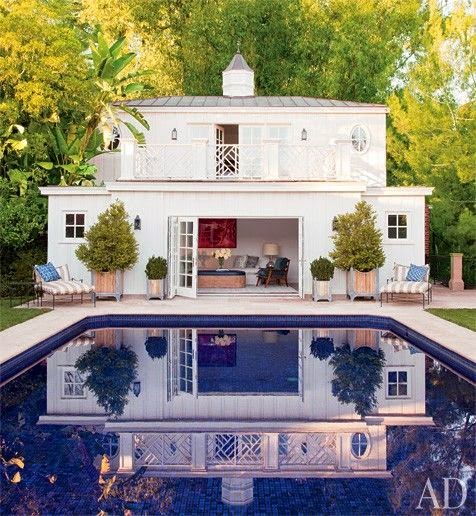
Deep indigo pool tiles, coupled with the architecture of the pool house, makes for an incredible outdoor setting.
Deep indigo pool tiles, coupled with the architecture of the pool house,
make for an incredible outdoor setting. Image via Architectural Digest.

Handcrafted artisan porcelain tiles are perfect for pools and water features. The materials and methods used in art pottery are similarly applied to classic porcelain tile-making techniques to achieve rich glazes that excite the eyes and hands.

As such, these porcelain tiles embody the charm and appeal of fine handmade ceramic ware. Glaze colors on porcelain offer unparalleled depth, clarity and vibrancy. With the warmth and originality of handmade art tiles, our porcelain pool tile collection is the perfect choice for pools, spas, water features, or any outside space. It should go without saying that each tile is custom manufactured by craftspeople dedicated to preserving the tradition of functional, natural beauty.

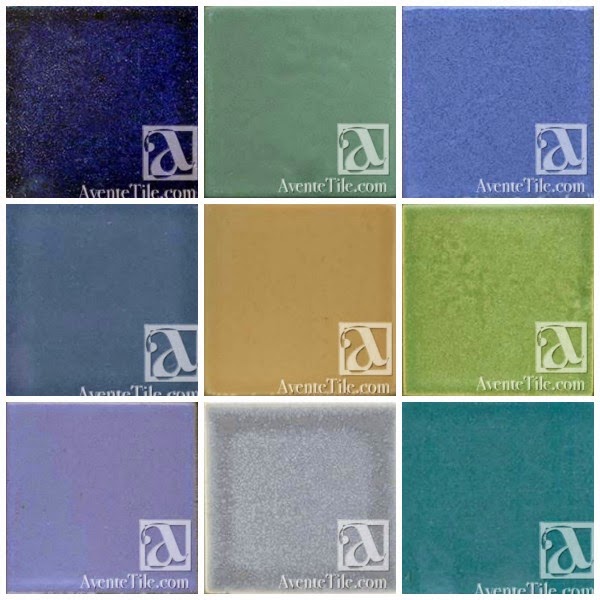
An example of the various glaze colors available with our Pool Tile Collection
An example of the various glaze colors available with our Pool Tile Collection.

Here are some important points to keep in mind when specifying or ordering hand-painted, artisan porcelain tiles:

  • 25 vibrant glazes are available in a wide-ranging palette.
  • Porcelain tiles are the optimum choice for pools and spas.
  • Ideal for interior and exterior applications.
  • Porcelain tiles are rated for freeze/thaw conditions.
  • Our tiles are made to order, so please allow 3 to 6 weeks.
  • Sample stock (3"x3") may be available, so please check with us.
  • Other formats, trim and molding available.

For additional design options, consider our Spanish Valencia 6"x6" ceramic tile, part of our extensive Spanish Ceramic tile collection. 

With its historical Spanish pattern and colors, Valencia’s design is created using traditional Majolica glazing techniques. The hand-brushed patterns are a perfect complement to outdoor living areas and water features.


Hand-painted glazed ceramic deco tiles with terracotta pavers showcase the stairs, risers and the pool.
Hand-painted glazed ceramic deco tiles with terracotta pavers showcase the stairs, risers and the pool. Image via Houzz | Custom pool tile design by Fariba at Archarium

Discover our porcelain pool tiles including all the colors, available trims, formats and accessories


 Designing with Tile

Inspiration for Pools and Ponds via Avente Tile's Pinterest Board

“Water is the driving force of all nature.” ~ Leonardo da Vinci

With the end of spring coming next month, summer's energy is quietly resonating on the horizon. Summer translates to taking on new projects, perhaps one that has been set aside for years. Now is the time to replace cracked or broken pool tile, or installing that fountain or water feature you've always wanted for the garden.

Using handmade or hand-painted porcelain tile for your next outdoor project will not only enhance the look of your home, but you can rest assured the tile you choose will withstand the elements, too. For whichever project you choose to conquer, Avente Tile is here to help you reach your design goal. Our extensive Ceramic Tile Design Idea gallery features a large collection of projects dedicated to inspiring you and your living space. How can we help inspire you today?

Tuesday, September 2, 2014

Cement Tile Rug Creates a Welcoming, Warm Patio


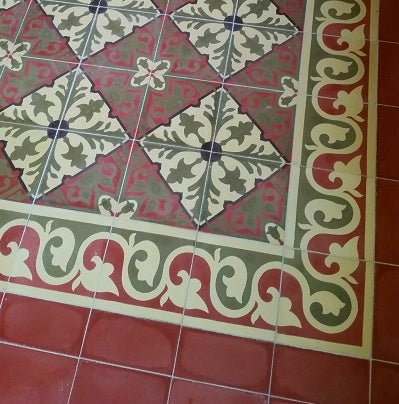
A centered rug pattern with border in a warm palette welcomes guests.

The stunning pattern of our Traditional Alcala cement tile series, in a custom colorway, creates a spectacular entry for this Southern California home. The owners wanted to showcase the front porch of their home with a dramatic cement tile pattern and border using warm colors and earth tones that were not only complementary to their own home, but also to their historic neighborhood.

The border, which effortlessly frames the 8"x8" Traditional Alcala cement tile pattern rather nicely, can be used to accentuate a room or hallway. This particular installation shows how the traditional method of using cement tiles can create a focal point in any area.

The colors used in this pattern are:


Suede


Blonde Wood


Indian Red


Brown

You can use these colors, or get creative by designing your own color scheme. Choose from any of the 80+ Heritage Cement Tile colors we offer.

Tips for Creating a Cement Tile Rug

Handcrafted cement tiles are capable of grabbing the attention of anyone who enters your home from the moment the front door is opened. The key to creating a long-lasting, successful cement tile rug is planning, and a good sketch or drawing done to scale showing the placement of the tiles. Read more about How to Create a Cement Tile Rug Design.

Handmade cement tile will not wear ragged over time - it only gets better! With a range of design possibilities, whether bold Cuban tile patterns in contrasting colors or classic cement patterns in harmonizing colors, handmade cement tiles will transform any space! See our new Guide to Buying Handmade Cement Tile to get started today!


Pinterest logo

Seasonal Harvests

Wine Cellars
Wine / Vineyards
"Wine is one of the most civilized things in the world and one of the most natural things of the world that has been brought to the greatest perfection, and it offers a greater range for enjoyment and appreciation than, possibly, any other purely sensory thing." - Ernest Hemingway

Now that summer is nearly over, it.'s almost time for harvesting the grapes that will, in good time, make it to your table to enjoy with a weekly meal, or to enjoy with friends and guests during the weekend. It takes years for a wine to truly develop into something to be savored, and yes, even admired.

The same could be said for our handmade cement tiles. Just like a fine wine, they too initially need time and care to develop into a long-lasting product - all before it arrives at your front door, ready to be installed.

Cheers, and enjoy the last weeks of summer!


Capture Summer Sun & Savings with our Valencia tile

Hand Painted Spanish Tile Listello


Capture the warm, golden sun and clear blue skies of summer with tile inspired from classic Spanish patterns. Our hand-painted, glazed ceramic Valencia Spanish tile makes a great kitchen listello or backsplash. It's also stunning when used for decorative stair risers.
Hand Painted Spanish Tile - Valencia PatternOur Spanish Valencia 6"x6" Ceramic Tile is part of our extensive Spanish Ceramic tile collection. With its historical Spanish pattern and colors, Valencia is created using traditional Majolica glazing techniques. The patterns, which are hand-brushed by the tile artist, are a perfect complement to outdoor living areas too, such as pools and fountains.

Turn the ordinary into extraordinary by using Spanish ceramic tile for your walls and backsplashes. To sweeten the deal, we're offering 10% off any Valencia 6"x6" purchase made during September. Discount applies only to stock on hand. You must place your order over the phone and mention the "SUMMER" coupon code at the time of purchase.

Tuesday, August 26, 2014

Cement Tile Quality Expectations in Custom Design


To help gain perspective and set realistic expectations of handmade tile, I often say artisan tiles are like the strokes of an Impressionist painting or hand woven rug. When you closely look at the stroke or weave, you will see color variation and the design motif itself may not be perceptible or clear. Step back though and the blended imperfection of the artist's hand creates a stunning work of art.

Sunset in Venice by Claude Monet
Image Credit
Our modern-day world has created an affinity for perfection. We are so used to seeing everything crafted to such tight tolerances that glossy productions are de reguer. One of the most common questions I hear when people receive their first sample or order is that the "The cement tile is not perfect" in some way.

Handmade Cement Tile will have slight imperfections
Handmade Cement Tile will have slight imperfections.
We want our installation to look like that bistro in Paris or Hacienda in the Yucatan. The truth is that the imperfections are there; but, the beauty of the pattern and variation in color allow your eye to see the same thing you see when you look at a Monet or Seurat.

The beauty of cement tile is in the variation and slight imperfections
The beauty of cement tile is in the variation and slight imperfections.

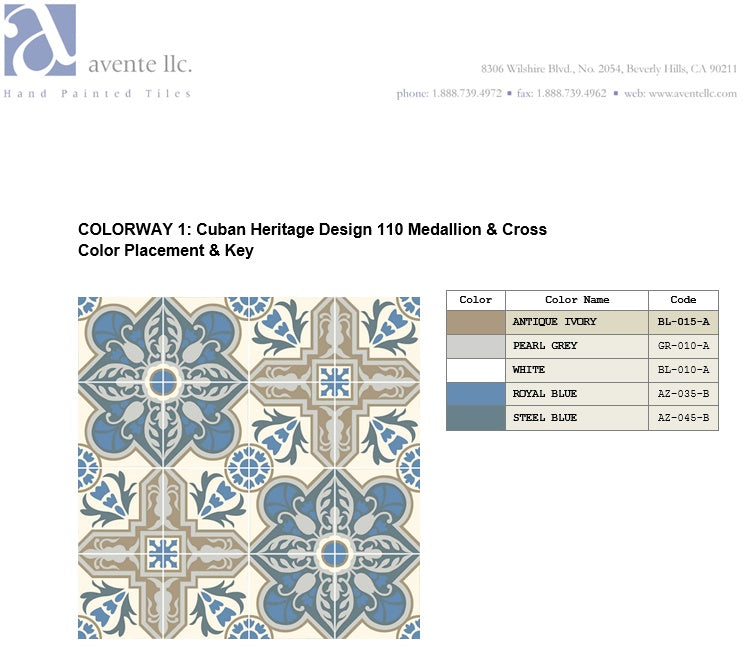
I do enjoy sharing this journey of discovery with folks unfamiliar with cement tile, or encaustic cement tiles as they are often called. I've been working with a customer in Denver on a design. She discovered our Cuban Heritage Design CH110-2B pattern and while she liked the colorway, it just wasn't right for her. I explained that the colors for that pattern are easily changed using any color from the Heritage Color Palette. However, this process takes time  we are talking design here. The best place to start is with color chips so you can create a cohesive design and really see the colors. A few weeks after receiving her chips, she had found the right colors and had us create several renderings to see what worked best.


A sample of one rendering that Avente provided using the customer's color choices
A sample of one rendering that Avente provided using the customer's color choices.

Color substitution are never easy; but, I was impressed with the colors she selected and loved the different choices. This design-inspired Denver homeowner found the renderings the ideal way to find what worked best and ordered strike-offs or sample tiles of the rendering that she like best.

This is a story, of how a project should go! And, I felt thrilled that each step of the process helped quickly guide the homeowner to make a decision they loved. Three weeks after the samples arrived, I received this email:
Hi Bill,

We received our strike-off samples. As expected we love the design and are so pleased with the color combination! Given the tiles are handmade, we did expect some slight variation from tile to tile 
 minor blemishes or color bleeding, lines not matching up perfectly.
Photo of customer's strike-off with slight color variation and line widths.
However, can you comment regarding this particular tile (see below)? Is it representative of the typical quality we should expect? We are concerned.

Pattern lines on tiles should be crisp.

I can see why she was concerned. In my efforts to set reasonable expectations for a hand made tile, I had neglected to explain that strike-offs samples may not always have the most crisp pattern lines because it takes time to get the metal mold to settle and work with the frame.

Here's my reply:
Dear Denver,

I think your expectations for cement tile are correct – which means I've done my job. The variation in color and slight imperfections you find in the first set of images are to be expected. The blurred pattern and edges in the second set of images (with red circles) should not be expected in the full order.

The primary goal with strike-offs is to confirm color acceptance for the pattern. The problems you see in the second set of images occur in strike-offs because we can’t make enough tiles and fine-tune the process that allows the mold to settle.


I hope you have enjoyed understanding how the hand of the artist creates a unique look in cement tile and the importance of quality in custom design. Never stop asking questions because they provide the clarity to ensure you are buying a top-notch product. If you enjoyed today's post on custom cement tile design and what makes a high quality tile, you might also enjoy our Avente Tile’s Guide to Buying Handmade Cement Tile to learn more about this amazing product.

Download: Guide to Buying Handmade Cement Tile

Of course, all of us at Avente Tile are here to help you with your cement tile questions, design solutions or technical questions. Feel free to post a question here and don’t hesitate to call us at 888.739.4972; or email: info@aventetile.com.

Tuesday, July 22, 2014

Porcelain Tile vs. Ceramic Tile


Since launching our new line of Porcelain Pool Tile earlier this month, we've been getting a lot of questions about what makes porcelain tile better than ceramic tile. More commonly, the question is simply, "What is the difference between porcelain and ceramic tile?" It’s a question I gladly welcome and one that is fairly easy to answer.

Glazed porcelain tiles, like the blue tiles used for this fountain, are good choice for pools and spas.
Glazed porcelain tiles, like the blue tiles used for this fountain, are a good choice for pools and spas.

Homeowners often discuss ceramic and porcelain interchangeably, as if they were one and the same. To add confusion, tile shop salespeople often extol the superiority of porcelain and claim there is a chasm that separates the two. Porcelain tile tends to be more expensive and this is one reason salespeople will try to "justify" porcelain to those not versed in tile’s technical details.

Porcelain tile is a type of ceramic tile and nothing more. In other words, all porcelain tiles are ceramic tiles; but, not all ceramic tiles are porcelain. Porcelain and ceramic tiles are very similar, especially when compared to cement tiles, quarry tile, glass tiles or stone. Porcelain, by definition, is a ceramic material made by heating materials, including clay in the form of kaolin, in a kiln to temperatures between 2,200 °F and 2,500 °F. Porcelain has high strength and translucence because of the formation of glass and minerals within the fired body at these high temperatures. Porcelain derives its present name from the Old Italian porcellana (cowrie shell) because of its resemblance to the translucent surface of the shell. While all of this might be interesting, it has very little relevance to porcelain tile.

What Makes Porcelain Tile – Water Absorption Rate
A tile can be a porcelain tile IF AND ONLY IF it has a water absorption rate of 0.5% as defined by American Society for Testing and Materials (ASTM) C373. To pass the test, a group of tiles is fired and then weighed. The tiles are boiled for five hours and then they sit in water for another 24 hours. Then, the tile is weighed again. If the tile weighs less than half of one-percent more as a result of water absorbing into its surface, then it is considered porcelain. No cowrie shells here.

Porcelain tile is typically extruded and will have less impurities than ceramic. It may be rectified and usually contains more kaolin than ceramic. However, the defining difference is that porcelain must have 0.5% or less water absorption rate.

Some ceramic tiles, like these decorative Malibu tiles, on the stair risers are rated for freeze/thaw cycles.
Some ceramic tiles, like these decorative Malibu tiles on the stair risers, are rated for freeze/thaw cycles.

Porcelain Tile Certification
Due to confusion and dishonest tile companies, the Porcelain Tile Certification Agency (PTCA) was created to certify tile as being porcelain or not. So, according to the PTCA, a tile has to meet ASTM C373 standards of water absorption to be branded as porcelain. A company does this by sending in five tile samples for testing, paying a fee, submitting a participation agreement, and renewing certification every three years. After certification, a company may use the "Certified Porcelain Tile" branding.

Only a score of North American tile companies have received Porcelain Tile Certification.

Why Tile Water Absorption Matters
Unless explicitly recommended, laying either porcelain or ceramic tile outside is typically not recommended in frosty environments. The primary concern: if the clay bisque or body absorbs water and you live in an area that freezes, your tile will crack when exposed to freeze/thaw cycles. That’s why it's imperative to know if the tile is rated for freeze/thaw cycles. You might argue that a glazed ceramic is imperious to water and it is. However, there is enough latent water in the bisque, often after installing, that can damage the tile when it freezes. If you live in an area, like Los Angeles or the Mediterranean, that is not subjected to hard freezing, then you don’t have to worry about this problem. Avente tiles that are rated for freeze/thaw cycles include:

  • Porcelain Pool Tiles – Plain (solid-color) porcelain tiles that have been freeze/thaw tested. They are great for spas, fountains or any outdoor application.
  • Yucatan Field Tile – Vitreous tiles are another type of ceramic tile that generally absorb very little water. We've used these tiles for projects in Colorado cabins at 7,000 ft. elevations that aren't used in the winter. The tiles are in great shape, year after year!
  • Malibu Decorative Tiles – Decorative ceramic tiles that have been freeze/thaw tested and pay homage to the Spanish Revival period of Los Angeles.
  • Malibu Field Tiles – Plain (solid-color) ceramic tiles that have been freeze/thaw tested and coordinate perfectly with our Malibu decos.

While conventional wisdom has been to keep porcelain or ceramic tile away from the outside, you can see there are lots of options for ceramic tiles that are suitable for exterior use.

Benefits of Porcelain Tiles
Porcelain does offer some benefits that you won’t find with ceramic. However, for most residential application most of these benefits are "gold cladding inside a steel suit of armor." In other words, while true, you probably won’t benefit from them – especially if using a glazed porcelain tile.

Porcelain clay is more dense than ceramic clay. Therefore, porcelain tiles are less porous than ceramic and this makes porcelain tile harder and more impervious to moisture than ceramic tile. The increased density also makes it more durable and better suited for heavy usage than ceramic tile. For instance, unglazed porcelain in a restaurant is the best choice for a hotel lobby or restaurant entry. Unglazed porcelain has through-body composition and color. Chip a glazed ceramic tile and you find a different color underneath the top glaze. Chip the porcelain and the color keeps on going--the chip is nearly invisible.

While both porcelain and ceramic are fired, porcelain is fired at higher temperatures for a longer time than ceramic. Additionally, porcelain has higher feldspar content, which adds to its durability. The strength in porcelain tiles means they resist wear and abrasion and the Porcelain Enamel Institute (PEI) ratings for porcelain tile tend to be at the top of the scale (4-5). The PEI ratings for ceramic tile can land just about anywhere on the scale from 1-5. The PEI ratings is commonly referred to as “abrasion resistance” and is probably the most commonly used industry rating for wear. PEI Ratings of 5 are good for heavy residential and commercial traffic, whereas a PEI 1 is recommended for wall applications only.

Porcelain tile and vitreous tile work well for an outdoor patio subjected to freeze/thaw cycles.
Porcelain or vitreous tile work well for an outdoor counter subjected to freeze/thaw cycles.

Find the Right Tile for the Project
I've had people request decorative porcelain tiles with a PEI 5 rating. I've asked them, "Where are you using the tile?" The customer replies, "On my kitchen wall. I want the best tile!" Different tiles and tile materials are manufactured for different applications to provide the best results. Take into account the application first and also who will be doing the installation. Ceramic tiles are less dense than porcelain tiles and usually a far easier material for homeowners and DIY installers to cut. Porcelain requires experience to cut because it is very hard and brittle compared to ceramic. Remember, ceramic tile will be less expensive than porcelain tile. While porcelain has many benefits, ceramic may the best choice for the job!

Tuesday, April 15, 2014

Tile Patterns: Playing with Pinwheel Designs


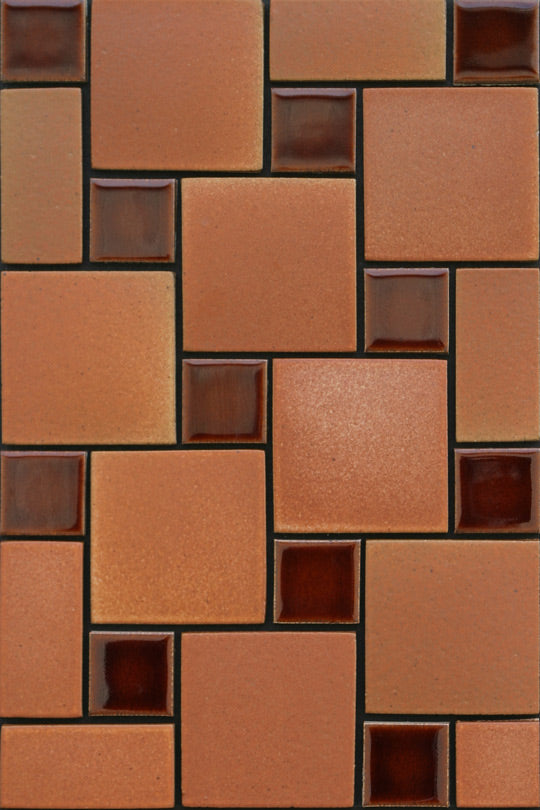
The pinwheel pattern is a popular and versatile tile layout that adds great visual interest by integrating solid color with decorative tiles into a timeless design. Here's a great example of a pinwheel tile pattern that pairs glazed ceramic dots with large ceramic tiles in a matte finish.

A pinwheel pattern with striking gloss and matte finishes.
A pinwheel pattern with Yucatan Glazes in striking gloss and matte finishes.
You can create a pinwheel pattern using only plain, solid color field tile. In the example above, tiles in similar colors are set-off by contrasting matte and gloss glazes. You can also add brightly glazed tiles with neutral colors to add a punch of color. If you're hesitant of using too much color in the pattern, then consider randomly alternating the brighter colors dots with dots in the same glaze as the larger tile, as seen in the example below.

Brightly colored glazed tiles can be randomly added to add interest to the design.

Or, you could choose to incorporate decorative tile with plain field tile, as seen in the two concepts show below.

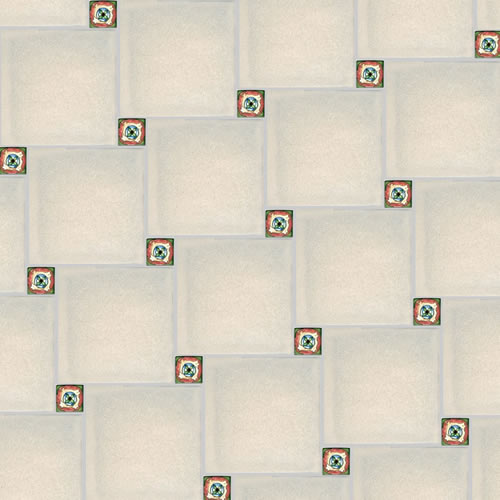
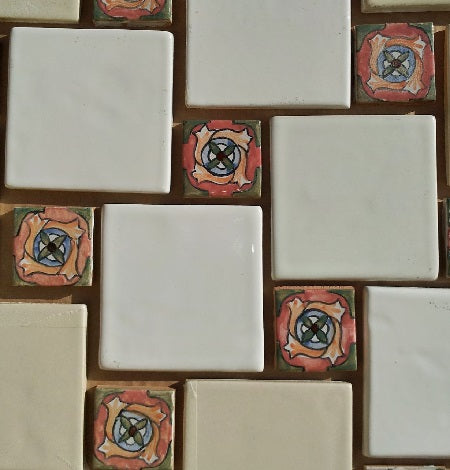
Decorative 1" ceramic tiles, referred to as dots, can be paired with 4" plain white tile.

Decorative 1" ceramic tile dots are paired here with 4" plain blue tile.

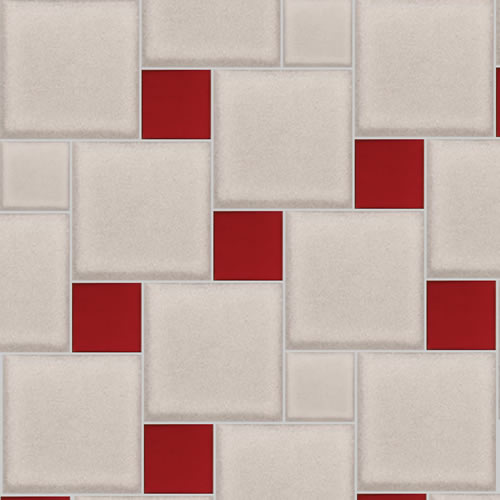
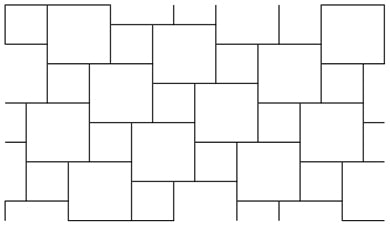
The pinwheel pattern is created by combining two different tile formats, usually with squares of different sizes.

A pinwheel pattern for tile often uses two different sizes of square tile.
A pinwheel pattern for tile often uses different sizes of square tile.

But, you can also create a pinwheel using tiles in different formats, such as squares and rectangles.

A Pinwheel Pattern for tile can use both square and rectangular formats.

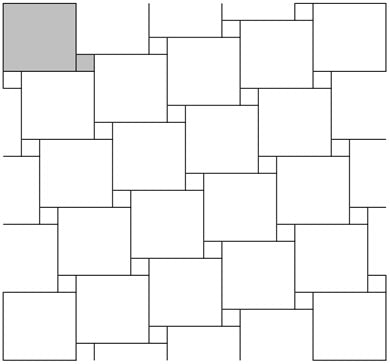
When using square formats, you can use two squares that are relatively close in size.

Large Square / Medium Square Pinwheel
The pinwheel pattern is a common tile layout.

Or, you can use squares that are distinctly different in size.

Small "dot" tiles used with a much larger format tile create a pinwheel.
Small "dot" tiles can be used with larger format tile to create a pinwheel.

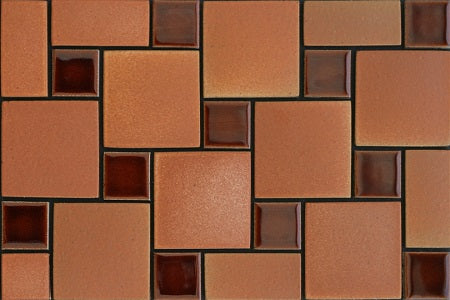
The pinwheel pattern works equally well on floor installations as it does for a backsplash or wall. In this installation, Mission Red Rustic Pavers in different formats are paired with glazed field tile. This random pattern draws its design inspiration from the classic pinwheel pattern.

This random floor tile pattern draws its inspiration from the pinwheel pattern.
This random pattern draws its inspiration from the pinwheel pattern.

Tile Tip: Calculating Other Tile Formats
If you aren't using a standard layout where we provide the ratio of tiles required, or you find yourself with uncommon tile sizes, then you'll need to calculate the tiles required by finding the ratio of small tiles to larger tiles using the exact area of each tile. So, measure the tiles and get out the calculator, then follow these easy steps
  1. Find the exact square inches of each tile to get an accurate amount. Do NOT use the tile's nominal dimensions.
  2. Find the area of the large tile in inches.
  3. Find the area of the smaller tile in inches.
  4. Divide the the area of the smaller tile by the larger tile.
  5. The ratio can be used to determine the number of smaller and larger tiles required for any job.
Example
Say the exact dimensions of the larger tile are 12"x12"; the smaller tile dimensions are 4"x4".
  • 12"x12" = 144 sq. inches
  • 4"x4" = 16 sq. inches
  • 16 / 144 = 0.1111
For a tile job that requires coverage of 100 sq. ft., you'll need 11.11 sq. ft. of 4"x4" and 88.89 sq. ft.of the larger format tile.

A Tile's Nominal Size 
Remember that tile is sold in nominal sizes. A 12"x12" tile might be as small as 11-5/8" or as big as 12-1/2".  Nominal means "about." Read more about nominal tiles sizes on our website.

The percentages shown are based on a full layout with no cuts. Actual percentages will vary depending on the area to be tiled and the layout.

Tile Tip
Perform a dry layout before you start. Layout the tiles in the pinwheel pattern using the grout width you desire. When you do this before installing, you will be able to pinpoint problems. Remember, with any layout, you want to avoid small cuts, cuts on small tile, and cuts by doorways on flooring tile. You will minimize waste, save time and avoid problems with a dry layout.

A dry layout with Andalucia dots & Yucatan Milkweed 4"x4"
This dry layout features our Spanish Andalucia ceramic tile dots and Yucatan ceramic tile in Milkweed 4"x4".

To see more tile layout patterns besides the pinwheel pattern discussed here, see our post on Rustic Cement Tile Paver Patterns.


To learn more about tile patterns, see my previous posts on Tile Tips for the Pattern Addict and Tile Tips for the Pattern Shy. You'll be a pattern pro!

Tuesday, January 7, 2014

13 Top Selling Tiles from 2013

As another year begins, I always like to take stock of went well for Avente and where the company can improve. I also like to review the year's top selling tiles. This informal review provides some insight as to what's trending in tile.

Last year, I reported that for the "first time in three years, a white tile was not our top seller!" That trend continues in 2013; but, white is still a strong contender. In 2013, Avente was sourced for a record number of commercial projects which certainly impacted the top of the sales list. Our top selling tile was tied in the #1 and #2 spots by the same cement tile pattern and colorway: Bayahibe in black and white and the Cluny C. Here's the list!

Top Selling Tiles of 2013

  1. Classic Cluny C 8" x 8" Patterned Cement Tile in Black & White

    Classic Cluny C Cement Tile

  2. Traditional Bayahibe Cement Tile 8" x 8" (Black & White Colorway)

    Traditional Bayahibe Cement Tile
  3. Mission Trebol B 8" x 8" Patterned Cement Tile in Black & White.

    Mission Trebol B Cement Tile

  4. Classic LaRochelle - A 8" x 8" Handmade Cement Tile


  5. Mission Plain White 8" x 8" Cement Tile

    Mission Plain White 8 x 8 Cement Tile
  6. Heritage Olive Green 14" x 14" Cement Tile

    Heritage Olive Cement Tile
  7. Bruselas B 8" x 8" Cement Tile


  8. Arabesque Aragon Spanish Paver Cement Tile

    Arabesque Aragon Spanish Paver
  9. Malibu Carrillo B 6" x 6" Hand Painted Ceramic Tile


  10. Cuban Heritage Cross Design 110 2B 8" x 8" Handmade Cement Tile
  11. Cuban Heritage Medallion Design 110 2B 8" x 8" Handmade Cement Tile

    Cuban Heritage Design 110 2B
  12. Malibu Latigo A 6" x 6" Hand Painted Ceramic Tile

    Malibu Latigo A 6 x 6 Hand Painted Ceramic Tile
  13. Arabesque Sintra Spanish Paver Handmade Cement Tile

    Arabesque Sintra Spanish Paver Handmade Cement Tile

Cement Tiles Remain Popular

As you can see, cement tiles dominate our top-selling tile list, with our new Malibu ceramic tile line making two appearances. I think cement tiles will continue to become increasingly popular - especially with the design community because:
  • Cement tiles provide stunning designs with straight-forward installation and minimal maintenance.
  • Existing patterns can be easily customized with a myriad of colors.
  • New patterns can be created and customized for minimal costs.
However, I don't think we will see the growth in cement tiles next year, like we have over the past five years. The market is becoming more mature and cement tile will command a larger market share.

Top Selling Tiles from Previous Years

Here's a look at top selling cement and ceramic tiles from previous years.
I always enjoy re-discovering what tiles were the top sellers. There are always surprises and fond memories. It's very clear that the American market isn't afraid of pattern; but, it is still timid of strong, bold colors. — Written by , Avente Tile