Showing posts with label Spanish tile. Show all posts

Tuesday, July 21, 2015

Tile and Spanish Colonial Revival Architecture at the Homestead Museum


The hot, humid weather we've been experiencing in Southern California since last week has taken a toll on me. I am not used to the tropical weather, so I find my mind wandering.

The entry gates to La Casa Nueva at the Homestead Museum

However, with the stifling and oppressive heat, there is great news! We received some much-needed rain for our parched California lands. Also, as my mind continues to wander, I couldn't help but think of a getaway or vacation, so I thought I would share one of my favorite tile haunts here in California, The Workman and Temple Family Homestead Museum.

The Moorish-inspired, Spanish door and entry of La Casa Nueva is meant to impress.

The Homestead Museum is a hidden gem that resides in the most unlikely of areas, the City of Industry, just outside of Los Angeles. The museum is a place to explore the history of the Los Angeles region from 1830 to 1930 through the hopes and dashed aspirations of two families. The six-acre site features the Workman House, an 1870s country home constructed around an 1840s adobe built by William and Nicolasa Workman.

Additionally, La Casa Nueva, a 1920s Spanish Colonial Revival mansion noted for its architectural crafts, was built by the Workmans' grandson Walter Temple and his wife, Laura. Additionally, El Campo Santo, one of the region's oldest private cemeteries, contains the remains of Pío Pico (the last governor of Mexican California), and other prominent pioneer families. Being a huge fan of Spanish and Spanish Colonial Revival architecture, I'll share some of the highlights of La Casa Nueva or the New House.

The main entry with its central, open plan is impressive and filled with hand-crafted details like carved vegas, wood floors, and tiled stair risers.

La Casa Nueva is filled with bespoke details of Spanish Colonial Revival Architecture
The main entry is filled with bespoke details of Spanish colonial revival architecture.


A grand staircase with Spanish tile and tile floor molding in La Casa Nueva
A grand staircase with Spanish tile and tile floor molding in La Casa Nueva.

As you discover the grounds, with your guide, you'll also find some unique rooms like this barbershop embellished with cement tiles. Cement tile such as this remind me of Cuban tile barbershops found in Havana during the same time period.

Cement tile in the Barber Shop reminds me of Cuban Tile
Cement tile in the Barber Shop reminds me of handmade Cuban Heritage tile.

A close-up detailing the cement tile pattern found in the Barber Shop
A close-up detailing the cement tile pattern found in the Barber Shop.

I'll continue with this amazing tour of La Casa Nueva in August. It's a feast of design details and tile - everywhere you go.

Feeling inspired? Want to learn more about how to use tile that create the style and feel of Spanish and Spanish Colonial Revival architecture? This is one of our passions and we can help. Visit our Spanish Tile Design Center today!


Tuesday, July 7, 2015

Malibu with Terracotta Ceramic Tiles: A Historical Perspective

Stunning view of the Malibu coast from the historic Adamson House.

Situated in one of the most sought after coastal locations on the West Coast in Southern California, and perhaps the nation, is the Adamson House. Now a museum, the Adamson House occupies land that was previously home to the Chumash Indians until the 18th century. Later, according to Malibu Adamson House Foundation (MAHF) records, “the Rindge family owned 17,000 acres and 20 miles of coastline.” With the coast on one side and the Santa Monica mountains on the other, “the Rindge family’s daughter, Rhoda, and her husband, Merritt Huntley Adamson, used the site to construct a beach house, now the historic Adamson House museum.

A closer look at the blue-glazed Malibu with terracotta tiles at the Adamson House.

Moreover, the Spanish Colonial Revival style home, built in 1929, enjoys the designation of being a National Historic Site, California Historical Landmark, and a California State Park. “Situated near the Malibu Pier between popular Surfrider Beach and the Malibu Lagoon, the house boasts an exotic mix of Spanish and Moorish influences with dazzling displays of decorative tiles and one-of-a-kind craftsmanship including hand-carved doors, hand-painted frescoes, molded ceilings, distinctive cast ironwork and lead-framed bottle glass windows,” the museum added.


Malibu glazed ceramic tiles meld beautifully with terracotta tiles along the walkways of the Adamson House.
Malibu glazed ceramic tiles meld beautifully with terracotta tiles along the walkways of the Adamson House. 

Interestingly, California was inundated with tile-producing companies in the 1920s, including Malibu Potteries, the company founded by May Rindge. “Filled with an entrepreneurial spirit, May Rindge started the firm after discovering her land was rich in the natural resources needed to manufacture ceramic tile. She wisely hired Rufus Keeler—a ceramist and draftsman whom many considered a ceramic genius for his secret glazes known for their color and clarity—as her plant manager,” according to the MAHF.

Thankfully, the tradition of creating colorful, decorative and long-lasting tiles similar to those found in the Adamson House remain strong with our latest introduction, Malibu with Terracotta Ceramic Tile.

Vibrant colors coupled with Spanish- and Moorish-inspired patterns make our Malibu with Terracotta Ceramic Tile collection a feast for the eyes.

This line of hand-painted ceramic tile pays homage to the Malibu and Catalina Potteries of California of the 1920s. Using classic patterns, these tiles are created using the cuerda seca technique to produce a slight relief and outline around each pattern color where the glazes pool. These tiles differ from our decorative ceramic Malibu tile line because the design utilizes unglazed terracotta or bisque for the background for a traditional Spanish look. Mix and match plain field tile colors from our Malibu Field to create harmonizing designs. The Malibu with Terracotta Ceramic Tile collection is suitable for all indoor applications, including walls and floors. They are also suitable for outdoor locations in frosty environments.


`

What good is the warmth of summer, without the cold of winter to give it sweetness? ~ John Steinbeck

With school out for the summer, and our dreams of upcoming summer adventures coming to fruition, we chose the Pinterest board that best reflects this exuberance – Summer Food and Fun!

Summer’s energy translates to taking on new projects, perhaps one that has been set aside for years. Replacing cracked or broken pool tile or finally installing that fountain or water feature you’ve always wanted for the garden, and perhaps adding Malibu Ceramic Tiles with Terracotta to an indoor or outdoor set of stair rises.

Using handmade or hand-painted porcelain tile for your next outdoor or indoor project will not only enhance the look of your home, but you can rest assured the tile you choose will withstand the elements, too. For whichever project you choose to conquer, Avente Tile is here to help you reach your design goal. Our extensive ceramic tile Design Idea gallery features a large collection of projects dedicated to inspiring you and your living space. How can we help inspire you today?

Tuesday, June 30, 2015

Adamson House Tile Tour

With the Fourth of July Holiday just around the corner, I found my thoughts wandering toward the sunny California coast. So, I thought I'd share one of my favorite historical tile haunts, The Adamson House. It's located right on the Pacific Ocean and steps from the Malibu Pier in Malibu, California. Even if you aren't interested in tile and California history, it's hard to find a reason not to visit this lovely location.

Located in Malibu, California, the grounds of the Adamson house make for an enjoyable summer destination
Located right on the coast in stunning Malibu, the grounds of the Adamson house make for an enjoyable summer destination.

The grounds alone are simply stunning and open to the public every day during daylight. The Adamson house is a Spanish Colonial Revival home that was built in 1929. It has a unique mix of Spanish and Moorish architecture styles and perhaps one of the most comprehensive collections of tiles from the day. Famed Malibu Tile was manufactured just steps from there. As the trophy home of the factory owners, the home is nothing short of a showpiece. The factory produced tiles that are still coveted today and can be be found in some of Los Angeles' architectural treasures, such as the Mayan Theater and City Hall.

Glazed terracotta planters with ornate designs are clues to what await.

Today, we'll explore only the outside grounds. But, stay tuned for next week's post where we'll show more details and provide a bit of history on this tile treasure trove.

The flagstone entry pulls the eye to the resplendent tile entry  of the Adamson house
The flagstone entry pulls the eye to the resplendent tile entry

Adamson House tiled entry is a tile tapestry
The entry to the Adamson House tiled is a tile tapestry

An exquisite peacock tile tapestry faces the back patio
An exquisite peacock tile tapestry water feature faces the back patio 

Moorish-inspired details like this parabolic window are adorned with glazed ceramic tile patterns
Moorish-inspired details such as this parabolic window are adorned with glazed ceramic tile patterns


Tiled outdoor tubs were used for washing pets - in style!

Did you enjoy today's post? Then you might want to subscribe to Avente Tile's mailing list for free! Subscribers receive our hand-painted ceramic and cement tile newsletter, Tile Talk, once per month.

Tile Talk offers great hand-painted ceramic and cement tile design ideas, tile tips, and information about new ceramic and cement tile products. We also explore historically significant tile installations, such as today's post, as well as photos of hand-painted ceramic and cement tile installations and designs, and perspectives from designers and architects who have specified and installed beautiful hand-painted ceramic and cement tiles. We think you'll find lots of inspiration!


Next week's newsletter will provide a historical perspective on Malibu tile and more information about this endearing historical landmark. Sign-up now for your free copy of Tile Talk!

Tuesday, June 23, 2015

Favorite Tiled Walks That Add Style


With the Summer Solstice now behind us, it's time to celebrate this much-anticipated season by enjoying the outdoors. I enjoy taking my daily neighborhood walks early in the day. It's during these walks that I stop to admire the tiled walks and entries. In this post, I'll be sharing some of my favorites that not only add to a home's uniqueness, but those that also provide welcoming curb appeal.

Rustic Pavers in Mission Red create a charming tiled walk for this home

It's easy to see why a tiled cement sidewalk offers so much more style than a typical grey, poured sidewalk. Colorful tiled walks provide a bright, eye-catching entry to a home. Red is a great choice for Mediterranean, Spanish, Spanish Colonial, Spanish Revival, and Adobe style homes. If you have a large landing or patio, then consider adding a medallion or patterned stair riser tiles.

Further, the exquisite beauty of hand-poured cement tile in plain colors is unmatched. You can see the hand of the tile artisan in the installation with the variation in color and shade from tile to tile. The floor or sidewalk almost shimmers like a gem, especially in full light. Look at the Heritage Indian Red walk below and you'll see what I mean. The tiled stair risers catch your attention, while the plain red walk causes you to linger and pause.


Plain cement tile, Heritage Indian Red, makes for a bright and eye-catching entrance.
Plain cement tile, Heritage Indian Red, makes for a bright and eye-catching entrance. A medallion using Traditional Alcala corner pieces adds interest and brings attention to the stair riser pattern 

Square Rustic Cement TIle Pavers in Cotto Dark laid in a running bond pattern create a fresh look
Square concrete tiles, Rustic Pavers in Cotto Dark, are laid in a running bond pattern to create a fresh look

Use our Rustic Pavers, laid on a wide grout line to accommodate their irregular shape, to create Old World elegance. If you want to replicated an antique look use Cotto Dark; Cotto Gold looks like traditional Spanish bisque. Or use a blend of the two, Spanish Cotto, to create lots of charm and interest with the color variation. Additionally, our Rustic Pavers color palette includes the tones found in Mexican pavers or Saltillo tile. So, you can even replicate the look of Saltillo, too.


This long entry path is made interesting by using Arabesque Octagon and Dot Rustic Pavers in Cotto Dark
This long entry path is made interesting by using Arabesque Octagon Rustic pavers in Cotto Dark. 

DESIGN TIP: When using shapes that are not rectangular or square, like hexagons and octagons, make sure to frame the edge of each side of the path with a rectangular tile.


Rustic pavers, shown here in Buff, look like Saltillo tile but will wear better.


DESIGN TIP: Create the look of Saltillo tile or Mexican pavers with cement tile. It's more durable, requires less care and is available in more sizes, shapes and trim.


Malibu deco tiles on the stair risers with Rustic Pavers in Mission Red for the treads.

DESIGN TIP: When laying tile on paths that are not square or do not run perpendicular, consider laying them "on point" to avoid mismatched grout lines, or you can use different sizes of tile.

Whether you're recreating the rustic elegance of Old World Spanish bisque or Saltillo tiles, looking for unique formats, or the exquisite beauty of hand-poured plain cement tile, we have a tile that works with your design aesthetic, color palette, and space. Are you looking for Spanish Colonial, Spanish Revival, Moorish-inspired designs, or something slightly more contemporary? No worries. We can help you create a look for a tile walk that is extraordinary, unique and in keeping with a home's architectural style.

Tuesday, May 26, 2015

Designer Insights with Bill Buyok

By Tudor Davies, Terry's Fabrics

As you may know, Bill Buyok is the founder and owner of Avente Tile. He started the company as an online tile showroom and catalog so that hand-painted ceramic tiles and cement tiles are more easily and broadly available for others who share the same passion. Avente Tile's mission is to search the globe to find the finest and most extraordinary tiles for their customers while providing excellent service and product knowledge. With that in mind, here are the Designer Insights of Bill Buyok.


Editor's Note: Bill Buyok's Designer Insights were originally published Tuesday, May 19 on the Terry's Fabrics Blog by Tudor Davies. It's only one in a collection of Designer Insights compiled by Tudor and his team that profile designers and design enthusiasts. We're honored to have been included in this collection, and thank Terry's Fabrics for this opportunity. If you enjoy Bill's insights, then be sure to visit the Terry's Fabrics blog and peruse all of the Designer Insights.

The following transcript shows the interview questions and Bill's response to each.
  1. In your own words, describe your unique style and creative aesthetic? I’m drawn to classic Spanish, Moroccan, and Italian designs, the nature-inspired design of the Arts & Crafts Movement, and a love for Hispano-Moresque design.
  2. When starting a new project, what is your creative process? Listen to customers, understand their needs and wants. I start with facts, then develop the color scheme and apply pattern, motifs, accent colors and flourishes to establish design and personal style.
  3. Out of the creative people you have worked with, who is it that you respect and admire the most? My customers, who include designers, architects, and residential customers, often envision something extraordinary, unique and bold. Our cement tiles allow customers to create designs and apply color to a pattern of their choice, allowing them to control the creative design process. Thus, the tile’s pattern and color have now been reinvented into something beautiful that I would have never imagined.
  4. When looking for inspiration is there a particular thing you do to get inspired? During my early morning treks through Los Angeles neighborhoods, I find inspiration around me. I then turn those inspirations into design ideas that are unique, fun and useful.
  5. What has brought you to this point in your career? And what is your advice for people looking to follow in your footsteps? Work hard, persevere, and do what you love! Every day presents its own unique challenges that you have to translate to opportunity. Never give up and always believe in yourself. Remember, it’s not how you handle the best days; but, how you handle the challenges and disappointments that really matter.

Tuesday, May 5, 2015

Make a Splash with Pool Tiles


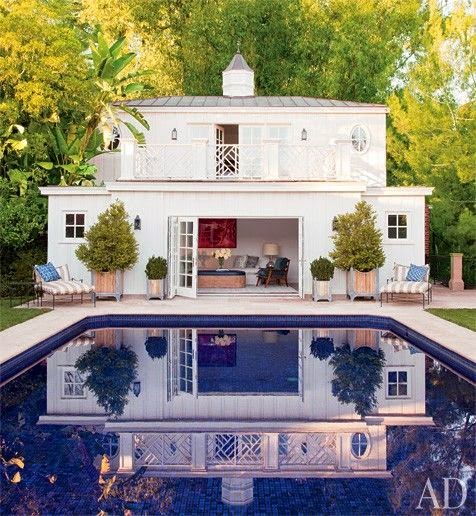
Deep indigo pool tiles, coupled with the architecture of the pool house, makes for an incredible outdoor setting.
Deep indigo pool tiles, coupled with the architecture of the pool house,
make for an incredible outdoor setting. Image via Architectural Digest.

Handcrafted artisan porcelain tiles are perfect for pools and water features. The materials and methods used in art pottery are similarly applied to classic porcelain tile-making techniques to achieve rich glazes that excite the eyes and hands.

As such, these porcelain tiles embody the charm and appeal of fine handmade ceramic ware. Glaze colors on porcelain offer unparalleled depth, clarity and vibrancy. With the warmth and originality of handmade art tiles, our porcelain pool tile collection is the perfect choice for pools, spas, water features, or any outside space. It should go without saying that each tile is custom manufactured by craftspeople dedicated to preserving the tradition of functional, natural beauty.

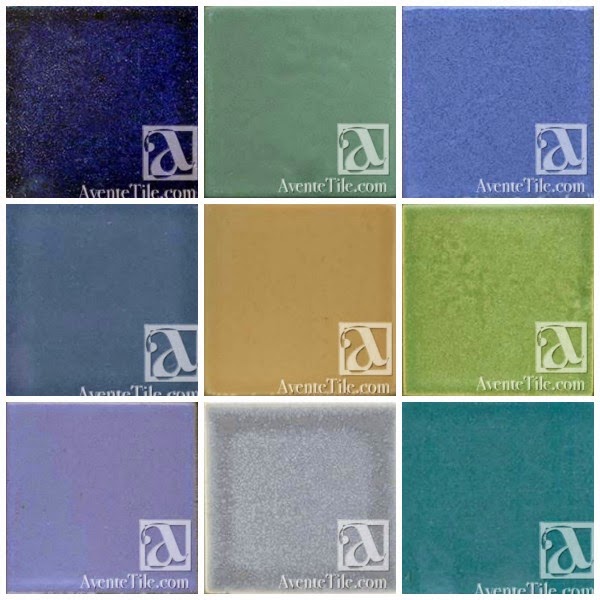
An example of the various glaze colors available with our Pool Tile Collection
An example of the various glaze colors available with our Pool Tile Collection.

Here are some important points to keep in mind when specifying or ordering hand-painted, artisan porcelain tiles:

  • 25 vibrant glazes are available in a wide-ranging palette.
  • Porcelain tiles are the optimum choice for pools and spas.
  • Ideal for interior and exterior applications.
  • Porcelain tiles are rated for freeze/thaw conditions.
  • Our tiles are made to order, so please allow 3 to 6 weeks.
  • Sample stock (3"x3") may be available, so please check with us.
  • Other formats, trim and molding available.

For additional design options, consider our Spanish Valencia 6"x6" ceramic tile, part of our extensive Spanish Ceramic tile collection. 

With its historical Spanish pattern and colors, Valencia’s design is created using traditional Majolica glazing techniques. The hand-brushed patterns are a perfect complement to outdoor living areas and water features.


Hand-painted glazed ceramic deco tiles with terracotta pavers showcase the stairs, risers and the pool.
Hand-painted glazed ceramic deco tiles with terracotta pavers showcase the stairs, risers and the pool. Image via Houzz | Custom pool tile design by Fariba at Archarium

Discover our porcelain pool tiles including all the colors, available trims, formats and accessories


 Designing with Tile

Inspiration for Pools and Ponds via Avente Tile's Pinterest Board

“Water is the driving force of all nature.” ~ Leonardo da Vinci

With the end of spring coming next month, summer's energy is quietly resonating on the horizon. Summer translates to taking on new projects, perhaps one that has been set aside for years. Now is the time to replace cracked or broken pool tile, or installing that fountain or water feature you've always wanted for the garden.

Using handmade or hand-painted porcelain tile for your next outdoor project will not only enhance the look of your home, but you can rest assured the tile you choose will withstand the elements, too. For whichever project you choose to conquer, Avente Tile is here to help you reach your design goal. Our extensive Ceramic Tile Design Idea gallery features a large collection of projects dedicated to inspiring you and your living space. How can we help inspire you today?

Tuesday, January 20, 2015

Arabesque Cement Tile Pattern Repertoire Grows


For January, I continue to welcome 2015 with our newest tiles. Today I showcase three new patterns in our ever-popular Arabesque cement tile line which is part of our curated Spanish tiles honoring traditional tile-making techniques, patterns, and colors.

What I like about the first two lines is you'll find both a large format appropriate for floors or large walls, as well as a smaller, mini-format that scales down well for a backsplash, small entry or hearth. These two new patterns are called Varona and Villatoro. Their names pay homage to Medieval Spanish castles. Can't you just imagine kneeling down in front of Queen Isabella on one of these patterns?

Varona is a new Arabesque pattern. Shown here in Normandy Cream.
Varona is a new Arabesque pattern. Shown here in Normandy Cream.

Villatoro in Tuscan Mustard with a textured, limestone finish.

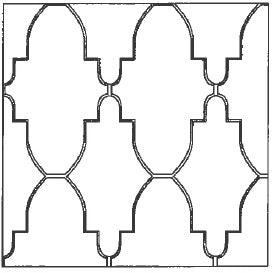
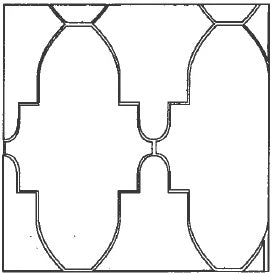
These scaled line drawings show the full-size Villatoro compared to the mini.

Villatoro Mini pattern uses 5"x8" and 5"x7" pieces

Villatoro pattern uses 7"x11" and 7"x10" pieces

Finally, the last new Arabesque pattern is Zafra. This large format measures nominally 8"x10" and is ideal for adding pattern to a master bath, larger powder room or living room floor.

Zafra is a new Arabesque pattern, shown here in Charcoal Gray

Quick Reference to Spanish Arabesque Tiles

The Arabesque collection pays homage to a deeply rooted and rich heritage of traditional Moorish and Spanish tiles that feature interlaced geometric patterns. With their nuanced curves and unusual geometric shapes, these Spanish tiles are sophisticated and charming. Choose from traditional bisque colors to create Old World charm, or use a contemporary shade such as off-white and grey. Spanish Arabesque Pavers are made to order and hand-crafted from cement in the USA. To start, select a shape, then choose a color from the Paver Color Palette. Blends and textures are also available.

Our Rustic Pavers are a unique line of Spanish floor tiles that can also be used on the wall. Look to our Rustic Paver collection if you desire square and rectangular formats (from 2"x2" to 16"x16") with a rustic feel. Not all tiles will be the exact same shape, as color variation is part of this collection's allure. Exquisitely designed and manufactured in the USA, Avente's made-to-order Spanish Pavers are hand-crafted using cement.

These Spanish Floor Tiles in classic shapes create a rustic look similar to what you'd find in traditional clay bisque tiles and pavers from Spain and Mexico. Once you've selected the size, then choose a color from the Paver Color Palette that offers classic clay bisque colors, as well as softer, contemporary shades. Blends and textures are also available.

Tuesday, June 24, 2014

Pavers, Tiles and Fountains: Mediterranean Gardens and Courtyards


It is a warm summer evening in the south of Italy and the garden beckons for company. The extended sunshine hours have cultivated the blooming of wisteria, star jasmine, and roses climbing along the trellises and arbors. The courtyard focuses on a babbling fountain designed in exquisitely crafted, boldly colored tile and a seating area surfaced in clay pavers where friends and family congregate over a bottle of wine and plate of cheese and fruit.

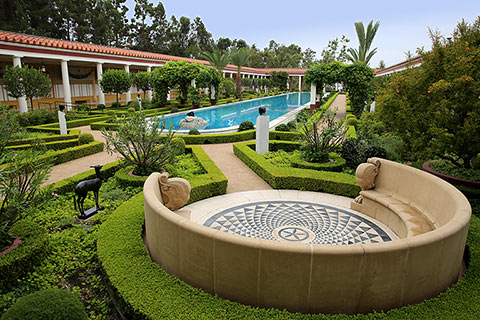
Getty Villa Outer Peristyle
Dating as far back as ancient Greece and Rome, these garden/courtyard areas were common amongst both the wealthy palaces as well as the smaller village homes. They were open to the sky and fresh air, adorned with luscious plant-life, sculpture, decorative masonry, and a fountain or pool.

The gardens of the Mediterranean are idyllic and have inspired landscapes throughout various regions and throughout the centuries. These heavenly spaces were intended to be utilized, to be lived in; they were a common gathering area and therefore were designed with both function and aesthetics in mind. Seating was intimate with both companions and attractive vegetation. Fountains were placed on rock walls as well as created as centerpieces.
Courtesy of Landscaping Network
Texture and color are important elements, as well as the notion of secluding oneself from the rest of the world. Paving for seating areas and walkways could vary from gravel, stone, and concrete, providing it offered practicality, as well as splashes of color and variance in texture.

Emphasis was given to the pools and fountains and there was great variety in these designs. Even the smallest garden could utilize a free-standing basin of elaborate or simple detail. Old monasteries may be adorned with an antiqued cistern head or simple geometric shape. Stucco was a common material, although concrete could also be used.
Getty Villa East Garden
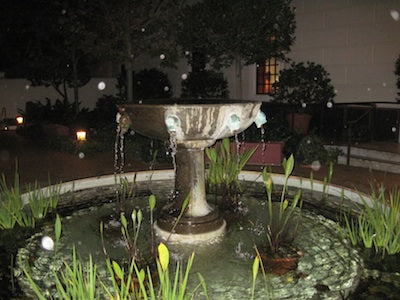
The Getty Villa of Los Angeles has been reconstructed after an ancient Roman style villa.  Their east garden offers an exquisite example of a fountain focal point, adorned with indigenous plant life and secluded from other sections of the property.
Fountain Close Up on a Rainy Night
There was no limit to the imagination for fountain designs, motifs, and materials used.  One could utilize a wall structure with bold tile colors and statuary.

Spanish Tile Fountain
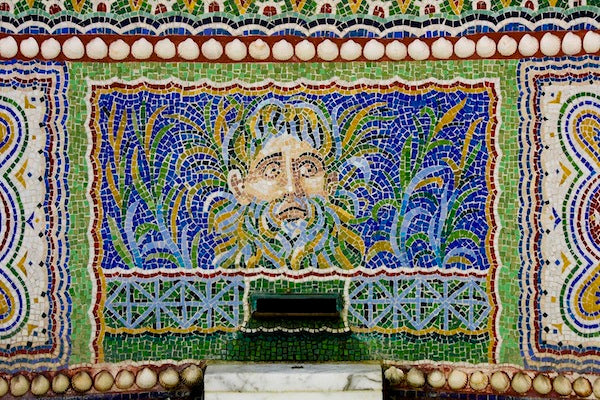
A mosaic could be created using smaller, brightly colored stones, tiles, and gravel.

Getty Villa Mosaic in East Garden

The more elaborately-inclined could create pools large enough to wade in, should one desire on a hot summer's day.
Cobalt Blue Pool - Courtesy Landscaping Network
Let your creativity soar when designing your dreamy and inviting outdoor spaces. Avente Tile has a plethora of options in colors and textures to manifest your design idea!

Tuesday, June 17, 2014

Porcelain Tiles from Spain and the World Cup

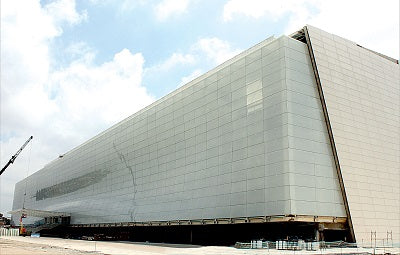
If you, like millions of others, watched the Brazil vs. Croatia soccer match that marked the start of the World Cup on June 12, then you saw the Arena Corinthians stadium in Brazil where the game was played.

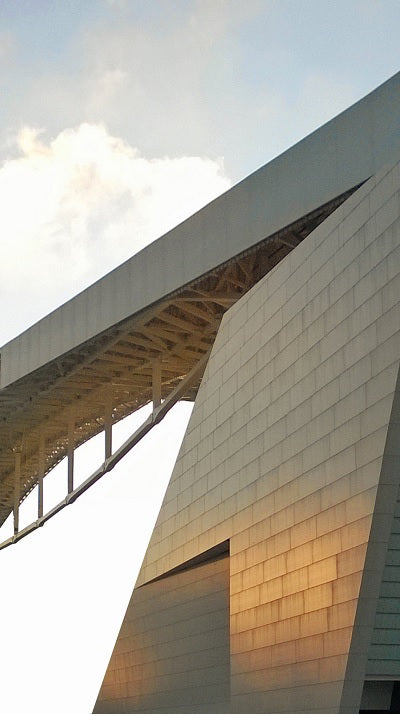
Our friends at Tile of Spain were kind enough to share some amazing tile facts about the Spanish tiles that were used for this project. The stadium's façade is covered with approximately 12,000 square meters of tile, which is equivalent to 2.97 acres or 129,000 sq. ft. of tile!

Arena Corinthians stadium in Brazil.
129,000 sq. ft. of Spanish TECHLAM® porcelain panels cover the Arena Corinthians stadium in Brazil. Photo courtesy of Tile of Spain
The tiles are TECHLAM® NEU porcelain panels developed and manufactured by Spanish company Levantina, and cover the outside of the Arena Corinthians Stadium.

The 12,000 square meters were cut into 4,000 1x3-meter panels, which are 5-mm thick and weigh 11.87 kg per square meter. The material, manufactured entirely in Novelda, Alicante, required more than 500 hours of work to create. The panels were then shipped to Brazil in 10 containers.

Arena Corinthians stadium in Brazil.
The Arena Corinthians Stadium in Brazil. Photo courtesy of Tile of Spain

Further, Tile of Spain mentions that this "cutting-edge porcelain material is highly resistant to adverse weather conditions, sudden changes in temperature and severe climatic conditions. This guarantees a very long life-cycle; when properly fitted it can last a lifetime."

Environmentally Friendly, Easy to Maintain
As a Greenguard certified product, TECHLAM® ceramic tiles are suitable for environmentally friendly uses."The Arena Corinthians Stadium has been built to sustainable design standards. Architectural solutions for energy efficiency, the use of alternative energies, improvement of interior environmental quality and efficient water consumption have been implemented in this project," noted Tile of Spain.

Further, as a 100% natural product, TECHLAM® is produced using oil-free mineral raw materials. Also, because of its thickness, it takes less energy to produce and ship than conventional tiles. Maintenance is also environmentally friendly as only water is needed for cleaning.

The Arena Corinthians stadium is one of the latest international projects in which TECHLAM®'s versatility has been utilized. Additional projects can be found worldwide, including: Hotel Hilton Times Square in NYC; Seocho and Hyehwa metro stations in South Korea; Australia's Rendezvous Hotel Perth; Germany's Frankfurt Airport; metro stations in Prague; and more.

More information about TECHLAM® by Levantina can be found here. Many thanks to the great folks at Tile of Spain for sharing this phenomenal structure and technology with us!

Tuesday, March 11, 2014

New Arabesque Pattern Designs in Cement Tile

                                                — Written by , Avente Tile

As we explore pattern and tile design this month on Tile Talk, I’d like to start by introducing some of our newest Arabesque cement tile patterns. Arabesque is a unique line of Spanish floor tiles or pavers that can also be used on walls, too! The collection pays homage to a deeply rooted, rich heritage of traditional Moorish and Spanish tiles that feature interlaced geometric patterns.

Malaga Spanish Paver in Charley Brown

Patterns are decorative designs on the surface of materials that usually have a repeating design motif. When you see pattern from afar, the motifs become so small that you no longer see them as single elements; rather, you perceive them as texture. Take a look at this pattern. Can you see texture? This is an example of "visual texture." It refers to an implied sense of texture or depth created through the use of artistic elements of line, shading and color.


Medina Spanish Paver in Assorted Grays

Patterns can also utilize a non-repeating design motif, as seen below. Although the shape repeats, the random color of this Saltillo-looking color makes the pattern very playful, sophisticated, and fun!

Safi Arabesque Spanish Paver in Artillo

While pattern refers to recurring visual events or motifs, they can exhibit visual texture, as well as true texture. Texture refers to the tactile quality of the surface - what you feel when you touch the tile. One of my favorite colors, Normandy Cream, uses a variety of texture and hue to create an antique look.

Arabesque Tangier Pattern Cement Tile in Normandy Cream
Arabesque Tangier Pattern in Normandy Cream
I hope you have enjoyed a quick look at some of our newest Arabesque Cement Tile Patterns, and how they can play with patterns while introducing texture.

Arabesque Paver Tiles are Different

Our Arabesque Paver Tiles differ from traditional cement tile. They are made with a soft mold. Traditional patterned cement tiles are made the old way with a steel mold and the color layer is only in the top 1/8" of the tile, whereas Arabesque Paver Tiles have true through-body color.

The texture, feel and style of the tiles is also very different, including the color. While both tiles are handmade and will have some variation, classic cement tiles have a more traditional, slightly formal, sophisticated look that works well for creating a multi-color pattern using the face of the tile. The cement Arabesque Pavers have a rustic feel with a softer defining edge, and have only one color throughout each tile.

With so many sizes, shapes, and colors to choose from, this is one tile you can't get enough of! Handmade rustic cement tiles can be used on floors, walls and both interior and exterior locations - even those subjected to freeze/thaw cycles.

Benefits of Arabesque Cement Tile

  1. Handmade appearance for a rustic look.
  2. True "through body" color. You can't scratch, cut or remove the surface color layer.
  3. Rated for freeze/thaw cycles.

How to Buy Arabesque Pavers

Follow these easy steps to make sure you find the right tile for you!
  1. Pick a color. With over 50 different color and blends, it's easy to find a color that works with your design scheme. Choose from our Classic, Premium, or Signature colors and blends. Make sure to use the Paver Palette Colors.
  2. Add texture, if you want. Tiles comes with a standard smooth finish; but, additional textures are available to create a weathered, antiqued patina. Textures are listed below the Paver Palette Colors.
  3. Find a format and size. You'll find prices, sizes, shapes and colors for our Arabesque Cement Tile! We have octagons, hexagons, pickets and more! Looking for shapes that are rectilinear? No problem! Square and rectangle formats are available from 2" to 14". You'll find prices, sizes, shapes and colors in our Rustic Paver Price List.

Tuesday, February 25, 2014

Tile Fireplace Design Tips

— Written by , Avente Tile

As February comes to a close, so does this month’s focus on tiled hearths and fireplaces. Today I will share three tips that can help you achieve the best design for your tiled fireplace. Tile will dramatically alter the look of a fireplace and improve a room’s look and character for a modest cost. Most fireplaces need just a few tiles, so it’s one place you can splurge, get something you really love, and still not break the budget. 


A fireplace using hand painted Spanish Tile
A fireplace using hand-painted Spanish Tile

Design Rule #1 for Tiled Fireplaces: What’s your style?

Define your style and your home’s style before deciding what tile to use. Just because you love a tile doesn't mean it will work with the design and flow of your home. Do you like plain, solid color tiles or patterned tiles? Are you working with a rustic or contemporary design? Answer these questions, and then remember that fireplace designs falls into two categories:

  1. Fireplaces that use only plain or field tile. 
  2. Fireplaces that use pattern tiles and field tile or some other material, like a stone mantle.

You can add decorative tile as accents or create a pattern with plain tile using two or three different colors of tile. Decide what style suits your tastes and the style of your house.

Hand Painted Spanish Tile Accents used for Fireplace
Detail of hand-painted Spanish tile accents used for this fireplace

Choose patterns consistent with your style and textures that will enhance it. The rough, uneven surface of our handmade Rustic Pavers and Arabesque tiles, for example, impart a provincial  feel that works great for houses with a Spanish, Southwest or colonial design. Our hand-painted Yucatan field tile will evoke an Arts & Crafts feel when the right glaze color is used. For a more formal effect, look for tiles with a smooth surface and precise edges. Use lighter glazed tiles to brighten the area. Relief tiles are a great way to add texture. 

Hand painted Spanish tiles create a rustic look
Hand-painted Spanish tiles create a rustic look

Decide on a color scheme and then start looking for tiles! Make sure to give the design aspects of the project proper attention. Take into account the scale, pattern, and texture of the tile.

Design Rule #2 for Tiled Fireplaces: Frame the Firebox


Cement Tiles used around a fireplace's firebox
This handmade Yuna cement tile border frames the firebox

It may sound obvious, simple or overstated, but make sure your fireplace tile design works by framing the fire box. It’s pretty simple, the theme for our design is really about the fireplace – drawing attention, warmth and comfort to that one space to share with friends and family.

You can frame the fire box with a decorative border tile or patterned cement tiles. For plain tile installations, use molding, different color tile, or a different format. For instance, if you are tiling the fireplace in 6”x6” tiles, try using a 3”x3” tiles around the box. 

Patio Fireplace with Sangria Red Tiles
Sangria red plain tiles frame the fire box.

Take a look at the four design ideas below. Notice each one of them frames the  firebox even if other design elements like a tiled mural or panel are used. In Design #1, a border pattern of cement tile creates the frame. In Design #2, a decorative liner or border tile frames the fire box. 


Andalucia Spanish Tile Fireplace
Decorative Andalucia Spanish ceramic tiles create a border around the fireplace's firebox.

Similarly, a 6" deco tile was used in Design #3. Plain tiles in sangria red provide the detail for the final design.

Yuna Cement Tile Fireplace
1. Cement Tile Fireplace
Spanish Tile Fireplace
2. Spanish Tile Fireplace

Spanish Tile Fireplace
3. Spanish Tile Fireplace
Ceramic Tile Fireplace Mural
4. Fireplace Tile Mural

Design Rule #3 for Tiled Fireplaces: Consider Scale

Scale your project to the size of the room and fireplace surface for balance. Tile size and pattern will drastically alter the fireplace’s appearance. The tile’s size needs to be in scale both to the size of the firebox and the room. The pattern on the tile, the tile layout (or how it is set), color and texture will create an atmosphere – make sure it’s the one you want.
 
A medallion using Celtic tiles provides subtle interest.
A medallion using Celtic ceramic tiles provides subtle interest.

Frequently, folks love a certain tile pattern and want to use it for their fireplace. After ordering samples, they will give me a call and say it just didn't work. I’ll often ask, “Did you try it in a smaller format? That fireplace isn’t very big when you are trying to fit patterned and field tile.” Sure enough, the design works when the tile is the right scale for the fireplace. When working with patterned or decorative tile, it’s a good idea to look at patterns that are available in different scaled formats, like our Malibu, Barcelona, Spanish and Portuguese ceramic tile lines.

Cuban Heritage Border Tiles provide warm colors and charming pattern.
Cuban Heritage Border Tiles provide warm colors and a charming pattern.

If you want to tile your fireplace, keep these three tips in mind and you should be on your way to creating a design that you will love! I hope you enjoy our series of blog posts devoted to tile and fireplace design.


Do you have a question about using tile for your fireplace or hearth? No problem! Leave your tile question in the comments section of this blog, and we'll happily answer any questions you may have.

Fireplace and Hearth Tile Design Posts

If you enjoyed today's post, then you might enjoy previous posts on tile fireplaces and hearths.