Showing posts with label Spanish ceramic tile. Show all posts

Tuesday, March 10, 2015

Tiled Stair Riser Design Picks


Nothing adds more curb appeal, sense of personal style, and a real design punch than using decorative tiles on stair risers.

Decorative tiles used on stair risers showcase personal style and add curb appeal
Decorative tiles used on stair risers showcase personal style and add curb appeal. 

Tiles allow you to showcase your sense of style. However, most customers approach the use of tiled stair risers with caution. After finding a tile or two they love, I am used to being asked, "Can I do that?" or "Will that look OK?"

Rule #1: There are no rules when it comes to tiling stair risers. To prove that point, I'm dedicating this post to the many different ways you can tile stair risers, I'll show the most common ways tiles are used; but,, you'll also see many variations on a theme. You can choose to use the same bright, bold pattern on each row, alternate patterns on each rows, or only add an occasional decorative tile between plain tiles on each riser, With countless variations on these themes, they can all look good!

Stair risers tiled with different tile patterns on each step
Stair risers tiled with different tile patterns on each step.

Rule #2: Start with tiles you love!  The right colors are more important than a specific pattern. Just find a pattern that speaks to you or works with your home's style. Colors that contrast with the landscape will make the tiles really standout, such as the bright yellow tiles in the photo above. You can also use colors that complement the house or trim color. Remember, if working with your home's existing colors, the tile colors don't have to be a perfect match - just close. It's common to find tile patterns, like our Malibu ceramic tiles, that are available in one or more different colorways. For larger projects, the glaze color placement can be customized.

The same bright tile pattern is used on each riser of these stairs
The same bright tile pattern is used on each riser of these stairs.

A hand-painted tile border pattern is repeated on these risers
A hand-painted tile border pattern is repeated on each stair riser.
Notice the color variation typical of hand-painted tiles

Quarter-design patterns can be used to add geometric interest to the design.

Similarly, geometric patterns, border patterns, and Spanish tile patterns can work well with many different styles of architecture. I love how quarter-design patterns can be broken up to create additional interest and their own unique pattern. In the photo above, the  quarter-design pattern on the decorative tiles would create a square when placed together on a wall. However, the home owner spaced them differently to create a fun zig-zag or chevron as you go up the steps.

If you are "tile crazy" like I am, finding the right tile isn't the problem. The problem is finding too many tiles you love, which might force you to narrow your selection, or does it? In the image below, an assortment of tiles is used to create a repeating pattern on each stair riser. Alternatively, the pattern on each riser could be random. This method works well for wide stairs.

Finally, keep in mind that decorative tiles don't have to span the entire width of the riser. While the effect is usually less dramatic, it looks nice especially when the decorative tile on the riser is also used as an inset among the pavers.

Different tiles can be used on the same stair riser.


Decorative patterned tile don't have to span the entire riser.

So far, I've only shown you examples of glazed decorative ceramic tile, which is certainly more common. However, cement tile can be used for stair risers, too. Because the colors in cement tile can be easily changed, cement tile is a fine choice when you want to create a unique design, coordinate colors with the tread, or carry the design from the curb to the home. The tight grout line can also be used to create a very smooth, almost seamless look to the riser, as well.

Cement tile colors can be customized so the stair risers color match or coordinates with the tread
Cement tile colors can be customized so the risers match or coordinate with the tread.


An encaustic cement tile border pattern tiles these stair risers
An encaustic cement tile border pattern looks magnificent on these stair risers.

Regardless of the tile or design there is one very important thing to remember. Rule #3: Have fun! Choosing tiles for your stair risers should be fun and reflect your taste and style. Whether you need a Geometric pattern, want to define a Traditional Spanish or Portuguese look, or have a home that demands Spanish Revival, Avente has the stair riser tile (and tread) for you! If you need help finding the right pattern, ceramic tile design, or cement tile border, please let us know. We can help.


Tuesday, September 2, 2014

Cement Tile Rug Creates a Welcoming, Warm Patio


A centered rug pattern with border in a warm palette welcomes guests.

The stunning pattern of our Traditional Alcala cement tile series, in a custom colorway, creates a spectacular entry for this Southern California home. The owners wanted to showcase the front porch of their home with a dramatic cement tile pattern and border using warm colors and earth tones that were not only complementary to their own home, but also to their historic neighborhood.

The border, which effortlessly frames the 8"x8" Traditional Alcala cement tile pattern rather nicely, can be used to accentuate a room or hallway. This particular installation shows how the traditional method of using cement tiles can create a focal point in any area.

The colors used in this pattern are:


Suede


Blonde Wood


Indian Red


Brown

You can use these colors, or get creative by designing your own color scheme. Choose from any of the 80+ Heritage Cement Tile colors we offer.

Tips for Creating a Cement Tile Rug

Handcrafted cement tiles are capable of grabbing the attention of anyone who enters your home from the moment the front door is opened. The key to creating a long-lasting, successful cement tile rug is planning, and a good sketch or drawing done to scale showing the placement of the tiles. Read more about How to Create a Cement Tile Rug Design.

Handmade cement tile will not wear ragged over time - it only gets better! With a range of design possibilities, whether bold Cuban tile patterns in contrasting colors or classic cement patterns in harmonizing colors, handmade cement tiles will transform any space! See our new Guide to Buying Handmade Cement Tile to get started today!


Pinterest logo

Seasonal Harvests

Wine Cellars
Wine / Vineyards
"Wine is one of the most civilized things in the world and one of the most natural things of the world that has been brought to the greatest perfection, and it offers a greater range for enjoyment and appreciation than, possibly, any other purely sensory thing." - Ernest Hemingway

Now that summer is nearly over, it.'s almost time for harvesting the grapes that will, in good time, make it to your table to enjoy with a weekly meal, or to enjoy with friends and guests during the weekend. It takes years for a wine to truly develop into something to be savored, and yes, even admired.

The same could be said for our handmade cement tiles. Just like a fine wine, they too initially need time and care to develop into a long-lasting product - all before it arrives at your front door, ready to be installed.

Cheers, and enjoy the last weeks of summer!


Capture Summer Sun & Savings with our Valencia tile

Hand Painted Spanish Tile Listello


Capture the warm, golden sun and clear blue skies of summer with tile inspired from classic Spanish patterns. Our hand-painted, glazed ceramic Valencia Spanish tile makes a great kitchen listello or backsplash. It's also stunning when used for decorative stair risers.

Hand Painted Spanish Tile - Valencia PatternOur Spanish Valencia 6"x6" Ceramic Tile is part of our extensive Spanish Ceramic tile collection. With its historical Spanish pattern and colors, Valencia is created using traditional Majolica glazing techniques. The patterns, which are hand-brushed by the tile artist, are a perfect complement to outdoor living areas too, such as pools and fountains.

Turn the ordinary into extraordinary by using Spanish ceramic tile for your walls and backsplashes. To sweeten the deal, we're offering 10% off any Valencia 6"x6" purchase made during September. Discount applies only to stock on hand. You must place your order over the phone and mention the "SUMMER" coupon code at the time of purchase.

Tuesday, June 10, 2014

Discover Design with Historic Spanish Tile Installations in Los Angeles

By , Avente Tile

As summer starts to kicks into full swing with the solstice less than 10 days away, I find myself enjoying the perfectly splendid outdoors of Southern California with longer walks each day. This summer, our blog is dedicated to handcrafted tiles and their use outdoors. Last week we introduced our new Artisan Porcelain Tiles for the Pool! This week I share my favorite historical tile installations that I've discovered during my urban treks in the neighborhoods of Los Angeles and Beverly Hills.

These brightly colored tiles are grouped beneath a Moorish arch to create a colorful tribute to Spanish Revival Architecture
Brightly colored tiles are grouped beneath a Moorish arch
create a colorful tribute to Spanish Revival architecture.
Most of these homes, duplexes or commercial spaces were built in the late 1920s. What you’ll see in every photo is the optimism that was prevalent in the era. Optimism expressed in the colors of the tile and the details of every structure; details that you rarely find today. Each installation pays homage to a specific architectural style: a portico found in a Mission style home, an extremely decorated façade of a Spanish Renaissance commercial location, or a fountain typical of Spanish Colonial architecture found in a duplex courtyard. You’ll find that these installations show some wear; but, they are a great tribute to both Los Angeles architecture and the classic forms they honor.

Patterns grouped or "blocked together" create an impact on the entry to a California Courtyard.

Color or pattern blocking is a common method where tiles of the same color or pattern are grouped together to create maximum impact or define an area. Unlike the photo above, here you see several different patterns and formats used on a planter box below a window. The quarter design circular patter has strong ties to Moorish patterns and the smaller format cross pattern is class Spanish. The colors are typical of tiles from the 1920s with a listello border on the bottom of the planter box.

Tiles patterns on this planter box are Spanish and Moorish influenced.
The cohesive palette and tiles is circa 1925.
Something you don't see very often today is the use of brick with Spanish tile. We often think of brick as being traditionally English. However, the red clay brick plays nicely with the red clay roof tile and decorative Spanish tiles on the planter box because it has a natural "terra cotta aesthetic."  The architectural details on the home enforce the Spanish style theme.

Brick can work with Spanish tile
Brick can work with Spanish tile designs especially when the
home's architectural theme is influenced by Spanish details.
Spanish tiles are used for the stair risers on this brick path leading up to the home. Notice the planter box to the left of the door at the top of the stairs. A cohesive color scheme of different shades of blue on the tiles work well with the alternating stair rise patterns and the planter box.

A cohesive color palette allows different patterned tiles to harmoniously exist.
A cohesive color palette of blues in the stair riser and planter box tiles
allows different patterns to harmoniously exist.
Architecture often speaks to the times both in form and function. The period in the late 1920s in Los Angeles was one of optimism and hope. Sunflowers are often considered a symbol of optimism with their big, over-sized, bright yellow flowers reaching up to the blue sky in the warmth of summer. Nothing symbolizes this optimism more than these stylistic sunflower tiles used on this Beverly Hills duplex.

These stair risers are tiled with a sunflower motif
Architecture captures the mood of the times.
These stair risers are tiled with a sunflower motif (circa 1925).

Doesn't that get your attention? You can't help but smile seeing those tiles on the stair risers.  Here's a close-up of these stunning tiles!

Detail of Sunflower Tiles on stair risers in Beverly Hills circa 1925.
Detail of sunflower tiles on stair risers in Beverly Hills circa 1925.

I hope you enjoyed exploring some of my favorite historical tile installations near the Los Angeles neighborhood where I reside. These are great examples of how Spanish tile have been used to complement an existing architectural style. Throughout the summer, we'll explore more homes in the neighborhood and share additional ways to bring tile outside! If you liked this post, don't miss my previous post, Spanish Tile Details Charm this Los Angeles Neighborhood.

Want to add some Spanish tile charm to your home? Then look through our Spanish tiles or browse our Ceramic Tile Design Ideas where you can find a large collection of projects showcasing our handmade and hand-painted Spanish tile. Let us know how we at Avente Tile can assist you!

Tuesday, May 27, 2014

Spanish Tile Details Charm this Los Angeles Neighborhood


The Memorial Day holiday marks the unofficial start of summer for just about everybody in America. I hope you enjoyed yours. For me, here in Los Angeles, I know summer is almost here not just by the long, warmer days but the early and relentless songs of the mockingbird - sometimes too early and way too long into the night.  These longer days allow longer walks in my Los Angeles neighborhood.

Spanish Tile adorn the riser and column on this Los Angeles home
Spanish tile adorn the riser and column on this Los Angeles home.

During each walk, I usually spy decorative tiles in outdoor settings that adorn the Spanish and Mediterranean homes that were influenced by Mission, Spanish, and Spanish Revival architecture. The asymmetrical arch is a rich architectural feature; but, look at the Spanish tile on the column. These are original tile circa 1928.

Spanish Tile on a column circa 1928

Brightly colored tile are influences of Spanish Revival architecture
Brightly colored tile are influences of Spanish Revival architecture. 

I do have a soft spot for tile and love seeing how decorative tile is used to add a splash of color or touch of interest to a home. Exterior stair risers are of course a common home for Spanish tile. This small, inviting patio places Spanish paver tiles and decorative Spanish tiles both on point. This "on point" layout for pavers can help small spaces like a front patio seem more expansive.

Both pavers and decorative riser tiles are on point in this open courtyard.
Both pavers and decorative riser tiles are "on point" in this open courtyard.

For a more private patio, the owner of the home below chose a high wall with Moroccan details and wood for the entry. And who wouldn't want a turret for their second-story bedroom? It's almost story book material!


Spanish tile, wood and Moroccan detailing provide a provide a provide entry.
Spanish tile, wood and Moroccan detailing provide an inviting entry.

But, let's get a closer look at those Spanish stair riser tiles.

Spanish tiles in the same pattern adorn these stair risers
Spanish tiles in the same pattern adorn these stair risers.

Not as common is the use of patterned cement tile. There is one unique example that I want to share. I love the quaint look of patterned cement tiles placed in the cement walk of this home.


Patterned cement tile placed in a poured cement walkway
Patterned cement tile placed in a poured cement walkway add interest.

The color and pattern in the walk guide you to this stunning recessed entry.


The cement tiles in the walk complement the color and pattern in this entry
The cement tiles in the walk complement the color and pattern in this entry.

I hope you enjoyed exploring just a few of my favorite homes near the Los Angeles neighborhood where I reside. These are great examples of  how Spanish tile and cement tile can be used to complement an existing design, while adding curb appeal. Throughout the summer, we'll explore more homes in the neighborhood and share additional ways to bring tile outside!

Want to add some Spanish tile charm to your home? Then look through our Spanish tiles or browse our Ceramic Tile Design Ideas where you can find a large collection of projects showcasing our handmade and hand-painted Spanish tile. Let us know how we at Avente Tile can assist you!


Tuesday, April 15, 2014

Tile Patterns: Playing with Pinwheel Designs


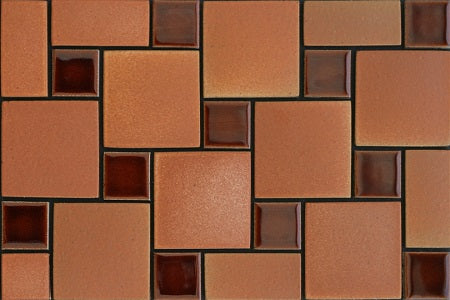
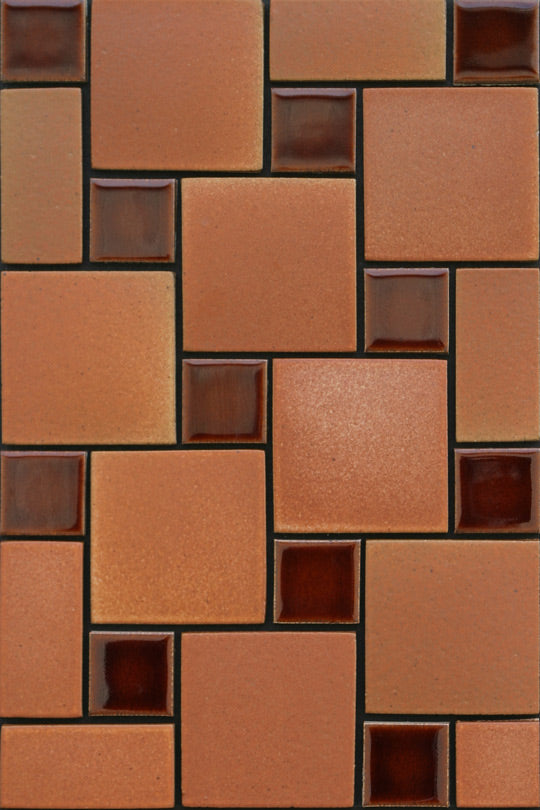
The pinwheel pattern is a popular and versatile tile layout that adds great visual interest by integrating solid color with decorative tiles into a timeless design. Here's a great example of a pinwheel tile pattern that pairs glazed ceramic dots with large ceramic tiles in a matte finish.

A pinwheel pattern with striking gloss and matte finishes.
A pinwheel pattern with Yucatan Glazes in striking gloss and matte finishes.
You can create a pinwheel pattern using only plain, solid color field tile. In the example above, tiles in similar colors are set-off by contrasting matte and gloss glazes. You can also add brightly glazed tiles with neutral colors to add a punch of color. If you're hesitant of using too much color in the pattern, then consider randomly alternating the brighter colors dots with dots in the same glaze as the larger tile, as seen in the example below.

Brightly colored glazed tiles can be randomly added to add interest to the design.

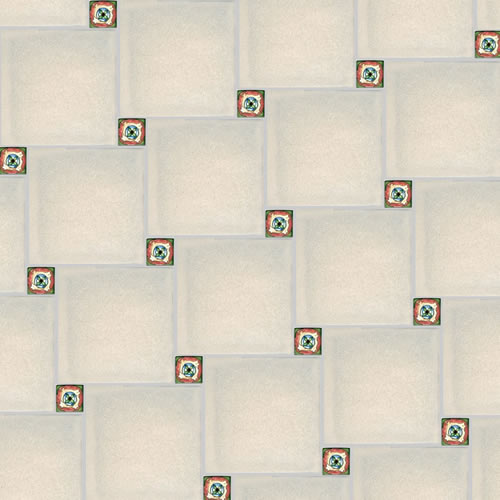
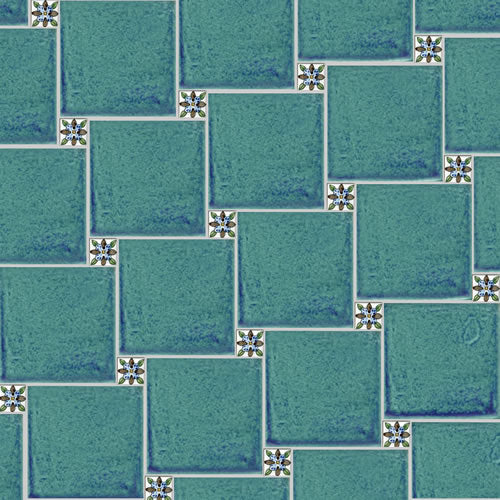
Or, you could choose to incorporate decorative tile with plain field tile, as seen in the two concepts show below.

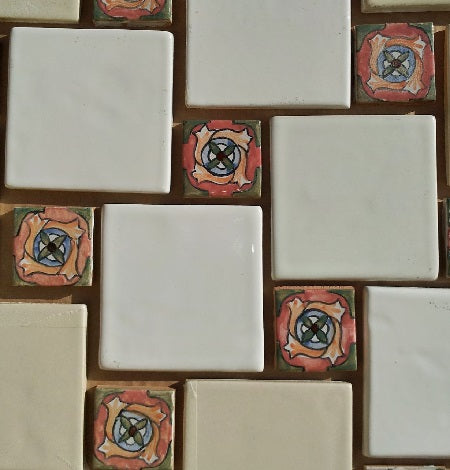
Decorative 1" ceramic tiles, referred to as dots, can be paired with 4" plain white tile.

Decorative 1" ceramic tile dots are paired here with 4" plain blue tile.

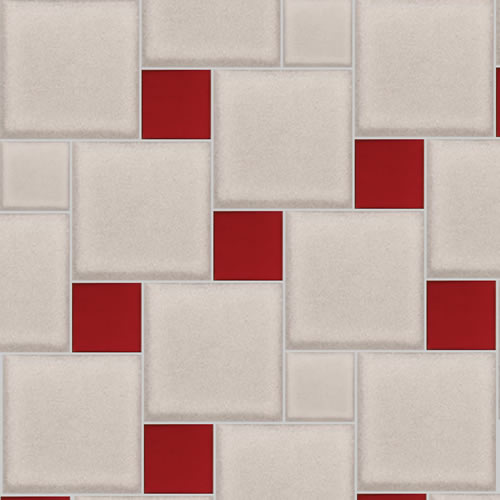
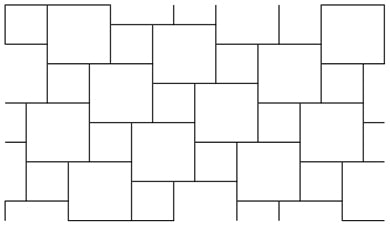
The pinwheel pattern is created by combining two different tile formats, usually with squares of different sizes.

A pinwheel pattern for tile often uses two different sizes of square tile.
A pinwheel pattern for tile often uses different sizes of square tile.

But, you can also create a pinwheel using tiles in different formats, such as squares and rectangles.

A Pinwheel Pattern for tile can use both square and rectangular formats.

When using square formats, you can use two squares that are relatively close in size.

Large Square / Medium Square Pinwheel
The pinwheel pattern is a common tile layout.

Or, you can use squares that are distinctly different in size.

Small "dot" tiles used with a much larger format tile create a pinwheel.
Small "dot" tiles can be used with larger format tile to create a pinwheel.

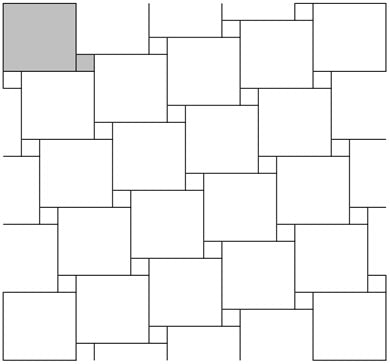
The pinwheel pattern works equally well on floor installations as it does for a backsplash or wall. In this installation, Mission Red Rustic Pavers in different formats are paired with glazed field tile. This random pattern draws its design inspiration from the classic pinwheel pattern.

This random floor tile pattern draws its inspiration from the pinwheel pattern.
This random pattern draws its inspiration from the pinwheel pattern.

Tile Tip: Calculating Other Tile Formats
If you aren't using a standard layout where we provide the ratio of tiles required, or you find yourself with uncommon tile sizes, then you'll need to calculate the tiles required by finding the ratio of small tiles to larger tiles using the exact area of each tile. So, measure the tiles and get out the calculator, then follow these easy steps
  1. Find the exact square inches of each tile to get an accurate amount. Do NOT use the tile's nominal dimensions.
  2. Find the area of the large tile in inches.
  3. Find the area of the smaller tile in inches.
  4. Divide the the area of the smaller tile by the larger tile.
  5. The ratio can be used to determine the number of smaller and larger tiles required for any job.
Example
Say the exact dimensions of the larger tile are 12"x12"; the smaller tile dimensions are 4"x4".
  • 12"x12" = 144 sq. inches
  • 4"x4" = 16 sq. inches
  • 16 / 144 = 0.1111
For a tile job that requires coverage of 100 sq. ft., you'll need 11.11 sq. ft. of 4"x4" and 88.89 sq. ft.of the larger format tile.

A Tile's Nominal Size 
Remember that tile is sold in nominal sizes. A 12"x12" tile might be as small as 11-5/8" or as big as 12-1/2".  Nominal means "about." Read more about nominal tiles sizes on our website.

The percentages shown are based on a full layout with no cuts. Actual percentages will vary depending on the area to be tiled and the layout.

Tile Tip
Perform a dry layout before you start. Layout the tiles in the pinwheel pattern using the grout width you desire. When you do this before installing, you will be able to pinpoint problems. Remember, with any layout, you want to avoid small cuts, cuts on small tile, and cuts by doorways on flooring tile. You will minimize waste, save time and avoid problems with a dry layout.

A dry layout with Andalucia dots & Yucatan Milkweed 4"x4"
This dry layout features our Spanish Andalucia ceramic tile dots and Yucatan ceramic tile in Milkweed 4"x4".

To see more tile layout patterns besides the pinwheel pattern discussed here, see our post on Rustic Cement Tile Paver Patterns.


To learn more about tile patterns, see my previous posts on Tile Tips for the Pattern Addict and Tile Tips for the Pattern Shy. You'll be a pattern pro!

Tuesday, April 8, 2014

Two-Tone Cement Tile Pattern Creates Serenity


This cement tile installation features a centered pattern so the eye is naturally drawn to the main field pattern.
This recent cement tile installation features a centered pattern so the eye is naturally drawn to the main field pattern.

Gone are the days of solely mixing bold colors and patterns only to walk away with a headache rather than inspiration! However, integrating patterns to create a soothing space remains high on everyone.s design list. With "staycations" on the rise, people crave to be enveloped in serene, soothing environments without leaving home.

Such was the case with one of our clients who created a very different effect with the Mission Ring Cement Tile pattern on their kitchen's backsplash by using the same color in almost all of the cement tile mold segments.

The green of the Mission Verde Caribe color was the perfect choice for this kitchen located in Hawaii. The white in the tile accentuates the white of the cabinets, while the effect of the wood tones reinforces the tropical, peaceful feel.

Mission Rings Pattern in Two Colors

Mission Rings Pattern in Several Colors

Thanks to our customization services, not only can you substitute colors to create a unique effect; you can also alter a pattern by using the same color in an adjoining pattern (or mold) segments. Designing with cement tile means taking a vision, idea or surrounding complementary area, and making it come to life!

To learn more about tile, patterns, and design, make sure to subscribe to Avente Tile Talk. Our blog is published weekly and this month, we'll continue to examine patterns by focusing on herringbone, diamond, and on-point and more. Join us!


Pinterest logo

Pinterest: Spring and Yellow

Easter & Spring pinboard

Color: Yellow
"Behold my friends, the spring is come; the earth has gladly received the embraces of the sun, and we shall soon see the results of their love!" — Sitting Bull

The sun is shining bright and warm, seeds have begun to sprout in our vegetable gardens and we couldn't be happier! It's amazing how a burst of color can enhance someone's day or living space.

What better color is there than yellow to brighten up an area that lacks something. From an accent wall, to a wall niche, and of course tile, spaces that include yellow are associated with happiness, intellect, and energy. Yellow is also closely related to Spring and Easter, where, according to color experts, both the color and the seasonal change produce a warming effect, arouse cheerfulness, and stimulate mental activity. With this month.s Pinboard selections, we know you.ll soon be focusing on the fresh and colorful changes that only come around this time of the year!

To get you started on your Spring cleaning and freshening up of spaces, here are several handmade cement tile and hand-painted ceramic tiles that evoke the feelings of this season year-round.

Featured Tile

Artist Series Life of Riley Hex Handmade Cement Tile


Classic Bordeaux-B Handmade Cement Tile


Heritage Tibetan Gold Handmade Cement Tile


Barcelona Yellow Hand-Painted Ceramic Tile


Portuguese Braganza Hand-Painted Ceramic Tile


Spanish Cadiz Hand-Painted Ceramic Tile


Inspired? Then visit our pages on houzz.com, our boards on Pinterest, and browse through dozens of our Cement Tile Design Ideas andCeramic Tile Design Ideas where you can find a large collection of projects showcasing our handmade and hand-painted ceramic tile, cement tile, decorative tile, mosaic tile, and so much more. Let us know how we at Avente Tile can assist you!